
Choose Lumber by Exposure, Not Just the Label
Dry, protected indoor work generally favors untreated lumber; weather, recurring moisture, insects, soil or fresh water may require correctly rated treatment.
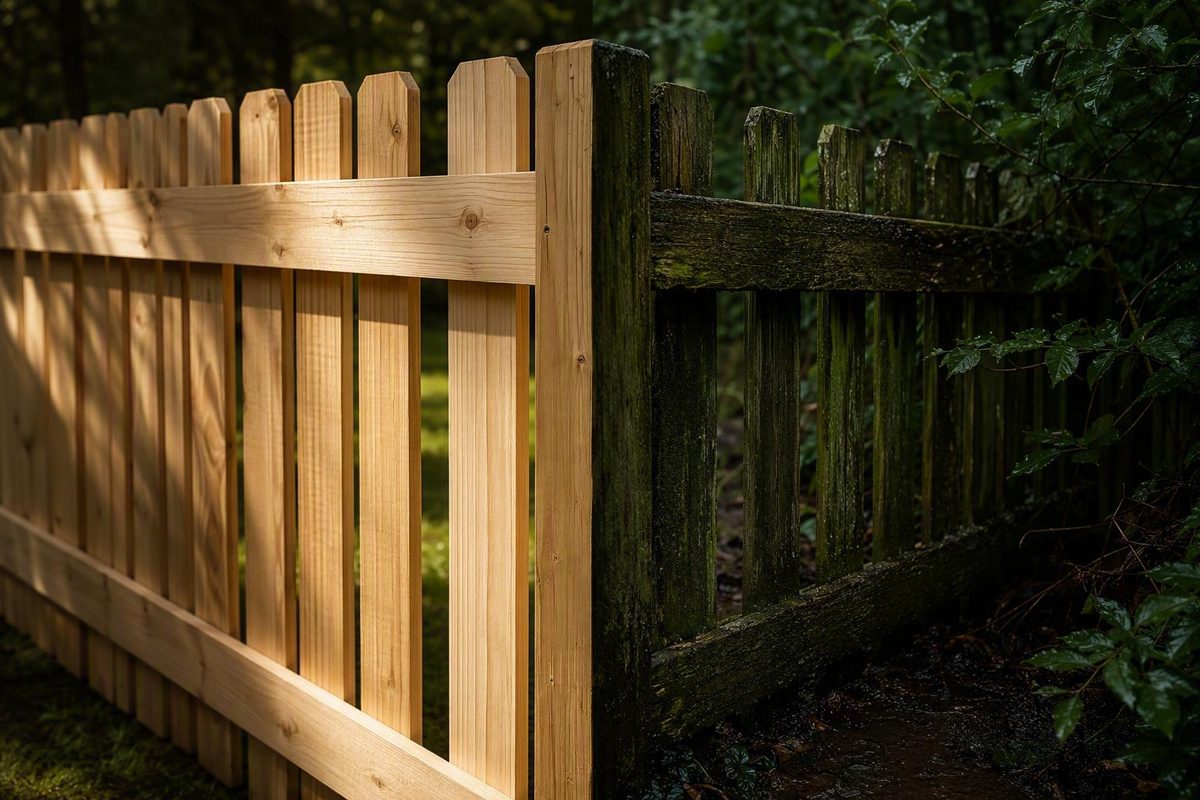
For most dry, protected indoor work, untreated wood is the practical starting choice. For lumber exposed to weather, recurring moisture, insects, soil, or fresh water—or where failure would be serious and replacement difficult—evaluate preservative-treated wood with the correct exposure rating. The right choice depends on each component’s location, drainage, structural role, and treatment label, not simply whether the board is called treated or untreated.
The quick decision: match the wood to its exposure
Pressure treatment introduces preservatives into wood to improve resistance to biological deterioration, including decay, fungi, and insects. It does not make lumber waterproof. Exposed wood still needs drainage, ventilation, maintenance, and, where appropriate, an exterior finish.
Use this table as a starting point, not as a complete purchase specification:
| Condition | Typical examples | Starting choice | What to verify |
|---|---|---|---|
| Dry interior | Indoor trim, shelves, furniture, crafts | Untreated lumber | Indoor moisture, structural requirements, applicable code |
| Occasionally damp interior | Sill plates, framing near intermittent moisture, some protected subfloor conditions | Evaluate treated lumber or another approved durable material | Moisture source, concrete or masonry proximity, insects, code |
| Protected exterior | Covered, coated porch components designed to drain quickly | Wood appropriate for protected above-ground exposure | Rain exposure, finish system, drainage, UC3A suitability |
| Exposed above-ground exterior | Fence pickets, deck boards, railings, walkways | Treated lumber rated for exposed above-ground use, or suitable naturally durable wood in selected applications | UC3B or a higher requirement, clearance, recurrent wetting, structural role |
| Soil or freshwater contact | Fence posts, members touching soil, freshwater structures | Ground-contact-rated treated lumber | UC4A or higher, project specification, exposure severity, replaceability |
“Indoors” does not always mean untreated, and “outdoors” does not identify one universal treatment level. An occasionally damp interior member may need added protection, while a covered exterior component that drains rapidly faces a different hazard from a fence post embedded in soil.
Before buying, check local code, project specifications, climate, drainage, and the latest applicable standard. Those requirements can change the appropriate selection even when a general-use table points in another direction.
What treatment changes—and what it does not
Pressure-treated lumber is wood into which preservatives have been introduced to improve resistance to decay organisms, fungi, and insects. This added protection makes it useful where ordinary untreated lumber would face a greater biological hazard.
The practical trade-offs include:
- Treated lumber provides added protection for demanding exposures but may cost more, look less natural, require compatible hardware, and need time to dry before finishing.
- Ordinary untreated lumber generally has a lower purchase price, retains a natural appearance, and may accept paint or stain sooner.
- Naturally durable untreated lumber occupies a separate category. Cedar and redwood may be reasonable choices for selected outdoor components.
These cost, appearance, and finish-readiness comparisons are general retailer guidance, not universal product specifications. Prices vary by market, appearance depends on the species and treatment, and moisture content can differ from one board to another. Lowe’s similarly distinguishes ordinary untreated interior lumber from treated exterior lumber while recognizing cedar and redwood as possible outdoor exceptions in its guide to treated and untreated wood.
Treatment provides resistance to biological deterioration, not immunity from water.
A board that dries quickly after rain does not face the same conditions as one that remains wet behind accumulated leaves.
Above-ground and ground-contact ratings are not interchangeable
The American Wood Protection Association’s Use Category System matches preservative requirements to service exposure. It is more precise than dividing the lumber aisle into only treated and untreated products.
For common residential conditions:
- UC1 covers dry, protected interior wood, with examples such as furniture and millwork.
- UC2 covers protected interior wood that may experience occasional dampness.
- UC3A covers protected above-ground exterior wood, including coated components with rapid drainage and assemblies protected from liquid water by design.
- UC3B covers exposed above-ground exterior wood, including decking, railings, walkways, sills, and fence pickets.
- UC4A covers general ground or freshwater contact and certain above-ground components exposed to comparable hazards.
These descriptions come from the service-condition categories in Section 2 of the 2024 edition of AWPA Standard U1. They orient buyers to the relevant exposures but do not replace the standard’s complete commodity specifications.
The distinction between UC3B and UC4A is especially important. “Above ground” describes physical location, but it does not always establish the required treatment. For specified sawn products, UC4A or higher may be required when wood is less than six inches above soil without a moisture barrier, repeatedly wetted, exposed to trapped debris, subject to severe conditions, critical to the assembly, or difficult to replace. The standard also cautions that federal, state, and local regulations may govern standardized products and that inclusion in an AWPA standard does not establish lawful use in every application. Consult the current complete standard, product documentation, and the authority having jurisdiction (AWPA Standard U1).
Consider a low deck beam that does not touch soil but sits beneath a joint where water and leaves collect. Its actual moisture hazard may be closer to ground contact than its location suggests. By contrast, an exposed fence picket that dries freely and can be replaced individually presents different exposure and failure consequences.
Fence lumber must be chosen component by component
A wood fence does not have one uniform exposure.
| Component | Likely exposure | Consequence of failure | What to investigate |
|---|---|---|---|
| Posts | Soil contact, splash, recurrent wetting; sometimes fresh water | High: supports fence bays and gates; replacement is disruptive | UC4A or higher as conditions require; post commodity, species, preservative |
| Rails | Exposed above ground; joints may hold water; possible low clearance | Medium to high: supports pickets and transfers loads | UC3B as a starting point; ground-contact-like hazards, drainage, structural specification |
| Pickets | Fully weather-exposed but usually accessible | Generally lower than posts or rails | UC3B treated lumber or suitable naturally durable wood; finish and design |
| Gate framing | Exposed, joint-heavy, loaded, and subject to movement | High for reliable operation | Exposure rating, recurrent wetting, stiffness, drainage, hardware compatibility |
A post that enters soil is a candidate for UC4A or a higher category—not merely for any board marked “pressure treated.” Its end tag or accompanying documentation should identify an intended use appropriate to the installation.
Exposed fence pickets are a straightforward UC3B example, subject to the actual design and local requirements.
Rails need separate attention. A rail close to soil, concealed by vegetation, or connected in a way that traps water may face a more severe hazard than its above-ground position implies. Its supporting role also increases the consequences of deterioration.
Gate framing has its own demands. Treatment alone does not address those needs; the gate also requires suitable dimensions, stable construction, drainage, and compatible connectors.
It can also add treatment to visible, replaceable components where naturally durable wood may satisfy the design. A better approach is to specify posts, rails, pickets, and gate framing independently.
When untreated cedar or redwood may work outdoors
“Untreated” does not describe one durability class. Ordinary untreated lumber and naturally durable species should not be assumed to perform alike outside.
Cedar and redwood have natural resistance to decay and insects and may suit selected exterior applications. Suitability still depends on:
- direct weather exposure;
- drainage and drying;
- soil clearance;
- local decay and insect hazards;
- structural importance;
- ease of inspection and replacement;
- code and project requirements.
Natural durability is not a blanket substitute for a specified treatment category. Do not assume an untreated cedar or redwood board is interchangeable with correctly rated treated lumber for a soil-contact post, concealed support, or critical structural member. The species and intended assembly still matter.
Mixed-material construction can therefore be a sensible option. A fence might use correctly rated treated posts and rails where failure would be disruptive, then cedar or redwood pickets where appearance is prominent and individual boards remain accessible. That is not a universal prescription; it illustrates why one project may justify different lumber choices for different components.
Finishing and fasteners after the lumber is selected
A coating selected for the wood, treatment, and exposure can improve moisture shedding and ultraviolet protection, but it cannot compensate for trapped water or inadequate drainage.
Treated lumber may arrive too wet to accept paint or stain properly. Do not rely on an arbitrary waiting period measured in weeks or months. Assess whether the surface is sufficiently dry for the intended coating and follow the coating manufacturer’s preparation and moisture requirements. Drying time varies among boards, products, climates, and seasons.
Some copper-based preservatives can give treated lumber a greenish cast, but color is not a treatment specification. Verify the label rather than using color to identify the Use Category.
Treated lumber—particularly material containing copper-based preservatives—may require compatible corrosion-resistant fasteners, hangers, hinges, and connectors. Match the hardware manufacturer’s compatibility guidance to the preservative listed on the lumber label, the environmental conditions, and the project specification.
For a fence, that review extends beyond nails and screws.
A lumber-yard checklist for avoiding the wrong board
Use this sequence before loading the cart:
- Name the component. A fence post, deck board, indoor shelf, porch trim board, and gate rail perform different jobs.
- Classify its exposure. Determine whether it will remain dry, become occasionally damp, sit under cover, face full weather, approach soil, enter soil, or contact fresh water.
- Look for moisture traps. Check joints, end grain, splashback, vegetation, leaf buildup, poor ventilation, and surfaces that cannot drain.
- Assess structural importance. Consider what happens if the component decays or loses strength.
- Consider replaceability. An accessible picket and a concealed support should not automatically receive the same specification.
- Account for local conditions. Rainfall, humidity, drying conditions, climate, and insect hazards can change exposure severity.
- Check governing requirements. Review plans, applicable code, permit conditions, and manufacturer or engineer specifications.
- Read the treated-lumber label. Verify the commodity, intended Use Category, wood species, preservative, and any special preparation requirements.
- Plan finishing and hardware. Confirm coating readiness and connector compatibility for the exact product.
- Buy by specification. A generic “pressure treated” description does not establish that a board is suitable for a particular exposure.
Where practical, manufacture or prepare components in their final form before treatment to reduce later cutting and boring. When field alterations are necessary, follow the treated-product documentation and project specification rather than assuming one procedure applies to every product.
Common selection mistakes
- Using ordinary untreated lumber for a high-risk outdoor structural component.
- Using above-ground treatment where low clearance, recurring wetness, or trapped debris creates ground-contact-like conditions.
- Treating every fence component as though it faces the same hazard.
- Painting or staining wet lumber according to a fixed calendar rather than its condition and the coating instructions.
- Selecting fasteners without checking compatibility with the preservative and exposure.
- Relying on board color or a generic treated label as proof of the required rating.
The exposure-first rule is straightforward: dry, protected conditions generally favor untreated wood, while weather, recurring moisture, soil, fresh water, structural importance, and difficult replacement increase the need for correctly rated treated lumber. Classify each component separately, verify its treatment label, and check current product documentation, the complete applicable standard, and local requirements before buying—especially when failure would be consequential.