
Pressure-Treated Fence Lumber: Plan Around 10–25 Years
Pressure-treated fence posts often last 10–25 years. Learn how treatment rating, drainage, cuts, hardware and maintenance change that range.
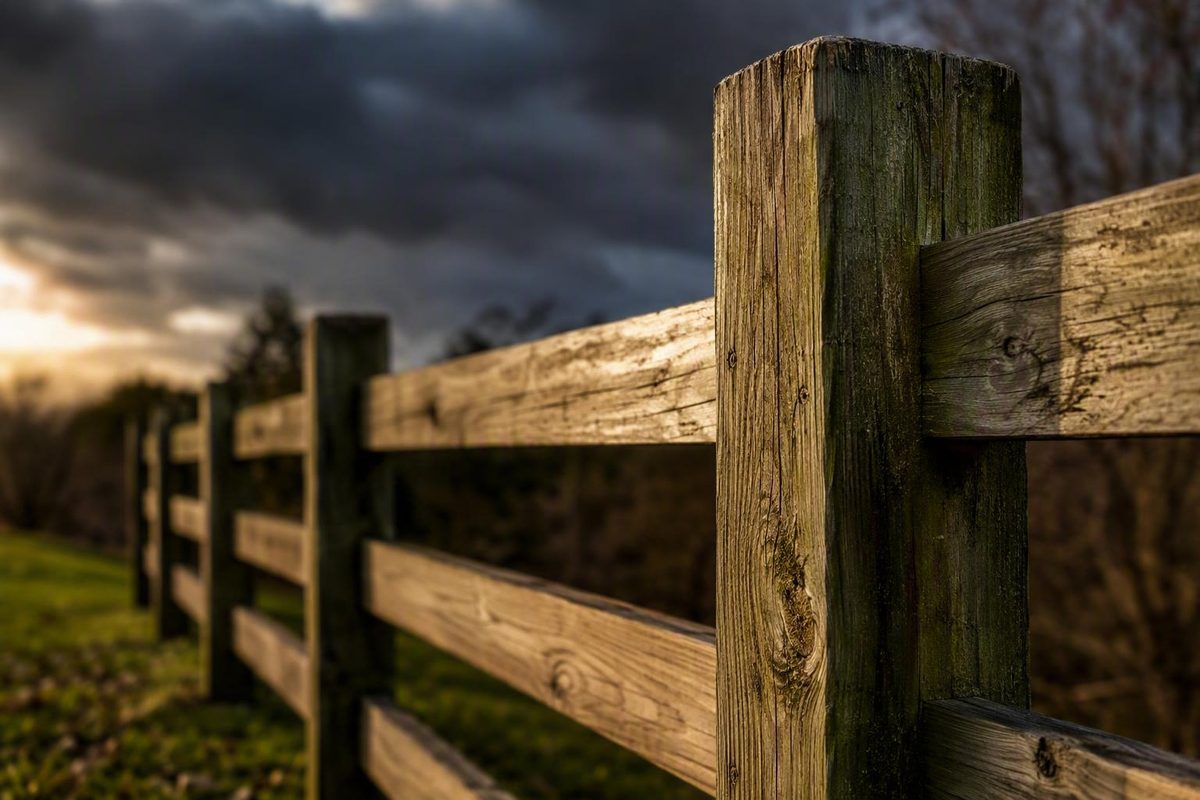
For a fence, 10–25 years is a reasonable planning range for pressure-treated lumber, especially for the posts. Penn State Extension gives that range for pressure-treated fence posts and says soil conditions and treatment quality are major variables (Penn State Extension).
That is a budgeting range, not an expiration date. A correctly treated post in well-drained soil may remain sound longer. The same nominal “pressure-treated” post can fail sooner if it has the wrong treatment rating, sits in chronically wet soil, contains untreated cuts below grade or supports a heavily loaded gate.
Use 10–25 years for planning, not a blanket promise
A wood fence does not age as one unit:
- Posts usually control the fence’s practical life because they meet soil and carry the rails, wind load and gates.
- Rails can fail at joints or in places that trap water even while most of each rail remains sound.
- Pickets are easier to inspect and replace individually. Splitting, warping and finish loss can become objectionable before decay makes them structurally useless.
- Fasteners and gate hardware can fail independently of the lumber.
Long-term laboratory and field-site results should not be turned into a blanket residential-fence promise. At a severe Mississippi test site, the USDA Forest Products Laboratory reported some preservative-and-retention combinations lasting 50–60 years or more. However, those specimens included older preservatives and the researchers specifically warned that they did not experience the mechanical loads and wear of real structures (USDA Forest Service). For an ordinary residential fence, the more conservative 10–25-year post range is the useful number.
The end tag matters more than the color
“Pressure treated” describes a process, not one universal durability grade. Check the end tag before buying.
For a typical fence:
| Fence part or exposure | AWPA category to look for |
|---|---|
| Pickets and rails clearly above soil, with air circulation | UC3B — exterior, above ground, exposed |
| Sawn posts placed in soil | UC4A — ground contact, general use |
| Lumber less than 6 inches above grade, likely to collect debris, repeatedly wetted or difficult to replace | UC4A or higher |
| Severe decay exposure or more critical, difficult-to-replace work | Consider UC4B, subject to product availability and the project specification |
The American Wood Protection Association lists fence pickets under UC3B and sawn fence posts under UC4A. Its standard also calls for UC4A or higher in several nominally above-ground situations, including components less than six inches above grade without a moisture break and places where vegetation or debris may remain against the wood (AWPA Standard U1).
Look for AWPA U1, the Use Category, preservative and retention on the tag. AWPA says wood without the AWPA U1 marking and Use Category probably does not meet its standards (AWPA homeowner guidance). Keep a tag and receipt with the project records; a warranty is only as useful as its exact coverage, exclusions and documentation requirements.
This specification check is the main difference between choosing lumber by color and choosing it for the actual exposure. For a broader material comparison, see pressure-treated lumber vs. cedar.
Five conditions that shorten fence life
1. Persistent moisture at the soil line
The ground-line zone is vulnerable because it is repeatedly wet and oxygen remains available. Climate, irrigation, dense vegetation, leaf litter and poorly drained soil all increase exposure. The USDA Forest Products Laboratory describes moisture as the source of most biodeterioration and says correcting moisture conditions is the most effective response (USDA Forest Products Laboratory).
Keep mulch, leaves and soil from building up against rails and pickets. Redirect sprinklers that wet the same posts daily. Do not assume stain can compensate for chronically trapped water.
2. The wrong treatment category
Above-ground stock is not a substitute for ground-contact stock. AWPA specifically warns that lumber treated only for above-ground use may not last long in ground contact and requires UC4A or higher for that exposure (AWPA).
On a contractor quote, ask for the post’s species, dimensions, Use Category and preservative—not merely “treated pine.”
3. Cuts and holes made after treatment
Treatment penetration is not identical in every species and piece. Cutting, notching or drilling can expose less-protected wood. Whenever practical, complete fabrication before treatment; otherwise, treat field cuts, notches and drilled holes according to AWPA M4 and the product directions, as the Southern Forest Products Association advises (SFPA). This is particularly important when a cut end will be buried.
4. Corroding fasteners
A sound rail is not useful if its fasteners rust away. Follow the treated-lumber manufacturer’s hardware specification. For its micronized-copper-treated products, for example, YellaWood identifies hot-dip galvanized, approved coated or stainless fasteners for exterior use and calls for stainless steel where wet conditions are constant or prolonged (YellaWood). Do not transfer that list blindly to another treatment system; match hardware to the actual lumber tag and exposure.
5. Loads the preservative cannot prevent
Preservative resists biological deterioration; it does not stop a narrow post from bending, a gate from sagging, rails from splitting or wind from overloading a privacy fence. Post size, spacing, embedment, bracing and gate design therefore affect useful fence life even when decay protection is adequate. Review fence post sizes by role and exposure before treating “ground contact” as the whole specification.
When to repair or replace
Inspect the fence at the soil line, rail-to-post joints and gate posts. Probe suspicious wood with an awl or screwdriver rather than judging by gray color alone.
Replacement is warranted when a post is soft, hollow or losing section at grade; a post moves because the wood itself has deteriorated; rails no longer hold fasteners; or a gate post cannot carry the gate safely. Surface checking and fading do not automatically mean structural failure.
If several posts of the same age are deteriorating, price a full post replacement or fence rebuild against repeated spot repairs. If the posts remain firm and only isolated pickets or rails are damaged, component replacement can extend the fence’s useful service without rebuilding the whole run.