
When a Fence Post Cap Is Worth Adding—and When It Is Not
They’re generally optional; add them to cover open posts, reduce direct rain exposure on sound wood, improve appearance, or provide lighting.
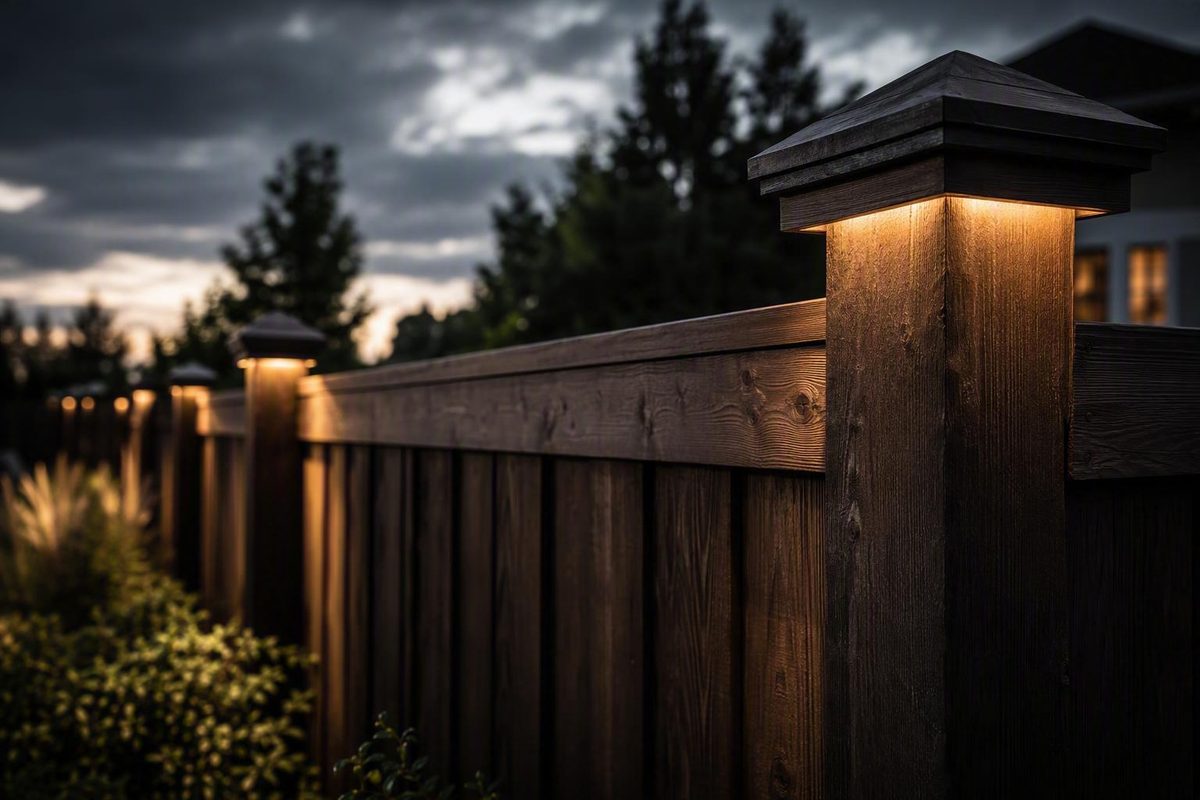
Fence post caps are generally optional accessories, not a universal structural requirement. Add one when it serves a clear purpose: covering an open post, reducing direct rain exposure at the top of a sound wooden post, improving appearance, or providing decorative lighting. Before omitting a cap, check the instructions and warranty for the exact fence system and confirm any requirements that apply to your project.
The short answer: Most fence post caps are optional
Whether a cap is worthwhile depends on the post material, its condition, and what you want the cap to accomplish. A water-shedding design may reduce direct rain exposure at the top of a wooden post. Decorative and solar caps may be chosen primarily for looks or lighting.
General advice cannot determine the requirements for every installation. Consult the fence-system manual, cap instructions, and warranty before deciding that a cap is unnecessary or choosing an attachment method. If project-specific rules apply where you live, verify those as well.
| Post or objective | Likely purpose of a cap | Next action |
|---|---|---|
| Exposed wood post | Reduce direct rain exposure at the top; improve appearance | Inspect and measure the post, then choose a water-shedding design |
| Hollow metal or vinyl post | Close the opening and finish the post | Check the fence-system instructions and match the post profile |
| Decorative upgrade | Add color, shape, or a finished look | Select a compatible design without assuming it provides weather protection |
| Solar lighting | Add decorative light | Confirm adequate sunlight and plan to maintain the panel, battery, and fixture |
| Visibly deteriorated post | No reliable repair function | Assess the post itself before adding a cap |
Address that condition first.
What a post cap can—and cannot—do
A well-fitted, water-shedding cap may limit direct rain exposure at the exposed top or end grain of a wooden post. That is a reasonable reason to install one, but it does not mean that every cap prevents rot or that a cap will extend fence life by a predictable period.
Performance depends on the cap’s design, material, fit, attachment, maintenance, and environmental exposure. Some products are intended to provide top coverage, while others are mainly decorative or combine decoration with lighting. Evaluate the specific product rather than assuming all post caps provide the same protection.
Commercial guidance describes caps as both decorative and protective accessories, but does not provide independent testing or a quantified lifespan benefit. Its selection guidance emphasizes fit, material, upkeep, and installation method (Fence Armor’s post-cap guidance).
It does not reverse existing softness, splitting, instability, or advanced deterioration.
Choose a cap by material, upkeep, and purpose
Start with compatibility. The cap should be intended for the post’s material, shape, and actual dimensions. Then decide whether its main job will be shedding water, closing an opening, improving appearance, or providing light.
| Cap type | Main use | Notable upkeep | Selection consideration |
|---|---|---|---|
| Treated wood | Traditional appearance and top coverage | May need periodic staining or sealing | Verify finish and attachment compatibility |
| Plastic or vinyl | Decorative finish or closure | Clean and inspect for looseness or damage | Match the post profile and specified mounting method |
| Acrylic | Decorative top or accent | Clean carefully and inspect the mounting | Confirm dimensions and installation instructions |
| Metal | Decorative or water-shedding coverage | Inspect the finish and fasteners | Use hardware approved for the cap and post |
| Decorative cap or finial | Visual enhancement | Clean and check the attachment | Do not assume an ornamental design sheds water effectively |
| Solar-light cap | Decoration and lighting | Clean the panel; check the battery and fixture | Confirm that the location receives adequate sunlight |
Avoid choosing solely by appearance or making assumptions about comparative durability without product-specific documentation.
A wooden cap may visually match a wood fence, but the finish can require periodic attention. Plastic, vinyl, acrylic, and metal provide other design options without establishing that one will last longer in every environment. Check the cap maker’s specifications for dimensions, intended post material, approved attachment methods, and maintenance.
Solar caps add lighting but also introduce components that require attention. The panel needs access to sunlight, while the battery or fixture may need inspection if performance declines.
Measure, fit, and attach the cap correctly
Do not rely solely on a nominal post label when buying a cap. Measure the actual outside dimensions of the post and compare them with the cap specification. For a hollow post, confirm the required outside profile in the fence-system documentation.
Use this checklist:
- Inspect the post. Look for softness, splitting, looseness, damaged edges, or substantial deterioration.
- Measure the outside dimensions. Measure both directions on a square or rectangular post, or the diameter of a round post.
- Read the cap specification carefully. Determine whether the listed size describes the post it fits or the dimensions of the cap itself.
- Test the fit. The cap should sit as designed and fit snugly without excessive gaps.
- Check the approved attachment method. Follow the directions for that particular cap and post combination.
- Inspect the completed installation. Confirm that the cap is seated correctly and does not lift off easily.
Depending on the product, documented attachment options include a press fit, exterior construction adhesive, or corrosion-resistant screws or nails. These methods are alternatives, not universal rules: a press-fit vinyl cap may require a different installation process from a metal cap with fastener holes or a cap designed for adhesive mounting. Seller guidance recommends measuring the post, achieving a snug fit, and following the installation method for the product (post-cap fitting and attachment guidance).
For an exposed or high-wind location, do not rely on an obviously loose fit. Use the secure attachment method approved by the product manufacturer. Avoid repurposing cans, pans, or other household objects as caps because their fit, outdoor durability, corrosion resistance, and suitability for secure attachment have not been established.
A cap-free option for wooden posts
A separate cap is not the only commonly suggested way to direct water away from a wooden post top. Practical community advice includes cutting the top into a slope or pyramid shape and then applying a finish or sealer compatible with the wood and its existing treatment system (examples discussed by deck owners).
This approach may appeal if you prefer a simpler appearance or do not want a separate accessory that requires attachment. Before applying a product to freshly exposed wood, check the lumber or finish documentation rather than assuming that any general-purpose exterior sealer is suitable.
A sloped and sealed top should be regarded as a practical suggestion, not as a proven equivalent or superior alternative to a properly fitted cap. Its comparative effect on post lifespan has not been established.
Inspect and maintain caps after installation
Periodically clean each cap and inspect it for visible damage or looseness. Check the mounting points or fasteners as appropriate for the product. Maintenance requirements will vary by material and design, so follow the cap maker’s instructions rather than using a fixed replacement schedule.
Wood caps may require resealing or restaining as their finish wears. For solar caps, keep the panel clean and check the battery or light fixture if illumination declines.
If a cap repeatedly works loose, reconsider its dimensions and the approved attachment method. Also inspect the underlying post: recurring looseness combined with softness, widening splits, or movement may indicate that the post itself needs attention.