
A Realistic Guide to Cedar Fence Service Life
For homeowners asking how long a cedar fence lasts, 15-25 years is a reasonable planning range for a correctly installed fence receiving ordinary care.
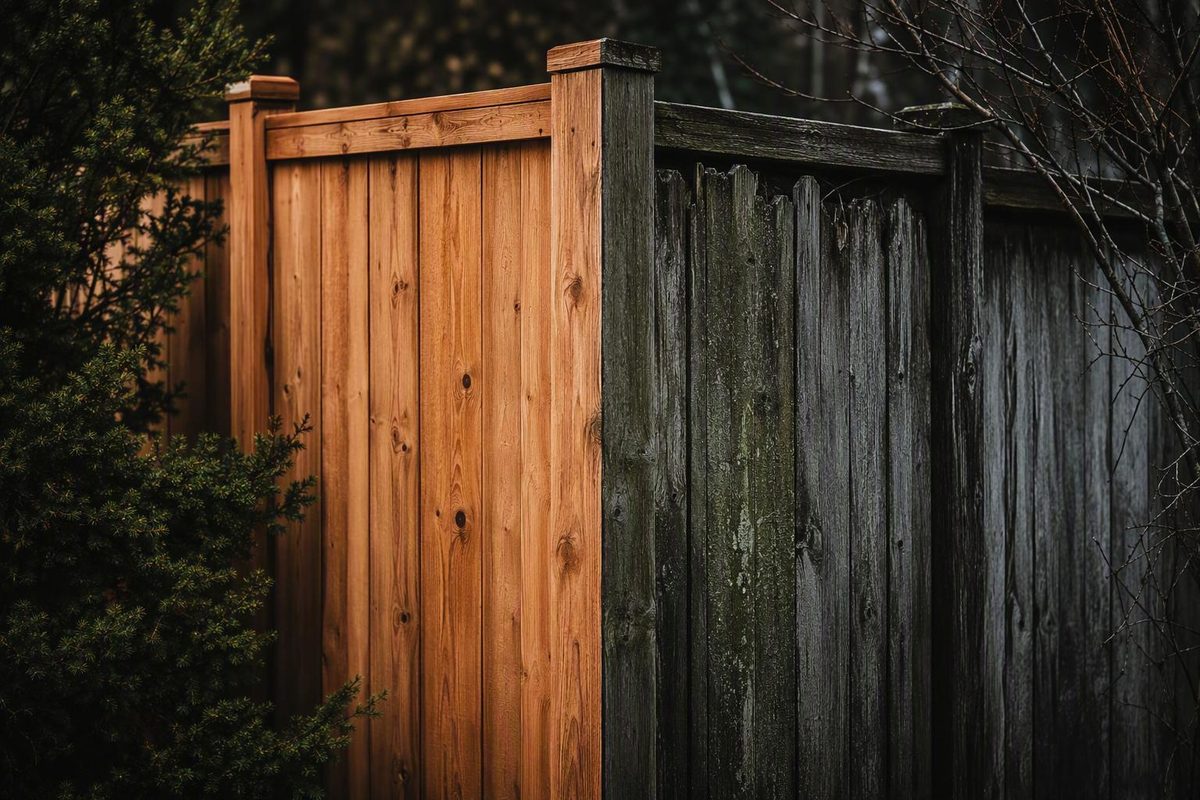
Editorial approach: This guide distinguishes commercial lifespan estimates from observable condition, avoids treating vendor claims as guarantees, and emphasizes inspection, drainage, and repairability. Questions or corrections may be sent to editor@fencereport.com.
The short answer: plan around 15–25 years, not a guaranteed expiration date
For homeowners asking how long a cedar fence lasts, 15–25 years is a reasonable planning range for a correctly installed fence receiving ordinary care. That figure is not an independently established service-life standard; it is a recurring estimate from commercial fence contractors and suppliers. Cedar Rustic Fence Co., for example, gives a qualified range of 15–25 years and identifies lumber quality, installation, drainage, exposure, and maintenance as important variables (Cedar Rustic’s cedar-fence lifespan guide).
Other regional contractors report similar figures. A Pittsburgh fence company also places cedar at 15–25 years while emphasizing drainage, post placement, spacing, slope, humidity, rainfall, and freeze-thaw exposure (Pittsburgh Fence Company’s cedar comparison).
For conservative planning, expect something closer to the lower end in wet soil, deep shade, harsh sun, repeated freeze-thaw movement, persistent sprinkler exposure, or where materials and construction are marginal. Under favorable conditions, commercial sources suggest that a sound fence may remain useful for 20–30 years or more, although the estimate is not supported by independent long-term testing (LRJ Lumber’s cedar-fence lifespan overview).
Service beyond 30 years is possible, particularly where damaged components can be replaced individually, but it should be treated as an exceptional result rather than a normal expectation. Precise maximums approaching 40 years depend too heavily on unspecified materials, climates, installation methods, maintenance, and definitions of failure to serve as dependable planning figures.
| Fence scenario | Contractor or supplier planning estimate | What drives the outcome |
|---|---|---|
| High exposure or poor construction | May fail before the typical range | Wet soil, trapped water, repeated sprinkler spray, deep shade, weak posts, poor connections, unsuitable fasteners, lower-quality lumber, or neglected damage |
| Ordinary residential conditions | About 15–25 years (commercial contractor estimate) | Competent installation, workable drainage, typical weather exposure, periodic inspection, and localized repairs |
| Favorable and well maintained | Approximately 20–30 years or more (commercial supplier estimate) | Quality materials, good drying conditions, stable posts, corrosion-resistant fasteners, prompt repairs, suitable finishing, and limited ground-line moisture |
These estimates describe the likely service life of the fence as a functioning structure, not how long the wood retains its original color. Cedar can fade, develop small surface checks, and turn gray while remaining firm and stable.
A fence has reached the end of its useful life when it can no longer perform its job reliably or when repairs are no longer practical. Posts may no longer remain upright, rails may repeatedly sag, gates may fail to close securely, or deterioration may become so widespread that replacing individual pieces would effectively mean rebuilding the fence. Neither a particular birthday nor silver-gray color establishes that point.
Why cedar-fence lifespan estimates vary so widely
Two cedar fences installed in the same year can age very differently. The difference usually reflects five groups of variables: wood quality, installation, moisture and drainage, regional exposure, and ongoing care.
1. Wood quality
“Cedar” does not identify one uniform product. A proposal might specify Western Red Cedar, Northern White Cedar, Eastern White Cedar, or another commercially available cedar. Grade, board thickness, defects, growth characteristics, and the proportions of heartwood and sapwood may also differ.
Heartwood is commonly valued for decay resistance. A Maine contractor associates Northern White Cedar heartwood with that property and estimates a 15–20-year life for its cedar systems, while warning that extremely wet or shaded conditions can shorten it (Main Line Fence’s cedar FAQ). That is a regional vendor estimate, not a lifespan that can be transferred unchanged to Western Red Cedar, every grade, or every fence design.
Cedar is commonly described as naturally resistant to insects and decay. “Resistant,” however, does not mean immune. Cedar can still rot under persistent moisture, check as it dries, warp as moisture conditions change, weather at the surface, or deteriorate where posts and boards remain wet.
2. Installation
Good lumber cannot compensate indefinitely for a poorly built structural system. Relevant details include:
- Post material, depth, spacing, and alignment
- How holes and footings manage water
- Whether local frost, soil, and wind conditions were considered
- Rail dimensions and attachment methods
- Board spacing that accommodates ordinary movement
- Gate framing, bracing, and hinge support
- Fastener type and corrosion resistance
- Joint quality and the repairability of individual components
- Clearance between lower boards and persistently wet soil
Small defects can interact. A heavy or poorly braced gate may pull its supporting post out of alignment. A loose rail connection can place more load on adjacent fasteners. Boards without adequate movement space may press against one another or distort as moisture conditions change.
3. Moisture and drainage
Water exposure is not limited to rainfall. Soil can remain wet after the upper fence has dried. Leaves and clippings can collect at the base. A sprinkler may soak the same post every morning. Dense vegetation and shade can slow drying, while accumulated snow can hold moisture against lower boards.
Occasional wetting is unavoidable outdoors. The greater concern is repeated wetting without enough opportunity to dry. That makes post bases, lower boards, and concealed joints important inspection areas, although it does not prove that these components will always fail before the upper fence.
4. Regional exposure
Climate-specific estimates are not national rules. A Colorado contractor, for example, estimates a typical local cedar-fence life of 15–20 years and identifies strong sun, snow, freeze-thaw cycles, and wind as regional stresses (Metro Fence’s Colorado cedar-fence guide).
A contractor in a rainy coastal region may focus more on saturated soil and slow drying. A Texas contractor may emphasize UV exposure, heat, humidity changes, and soil contact. Even within one neighborhood, a shaded fence at the bottom of a slope may experience very different conditions from a nearby fence on open, well-drained ground.
5. Ongoing care
Maintenance cannot reverse decay or make an unstable structure sound again. It can prevent avoidable problems from spreading. Clearing debris, correcting sprinkler spray, replacing a loose fastener, repairing a rail, or addressing an isolated post can preserve adjacent components that remain sound.
Finishes may reduce water absorption, UV weathering, and color change, depending on the product, preparation, and application. The available commercial evidence does not establish a dependable number of additional structural years attributable to stain.
Nearly all numerical estimates discussed here come from fence contractors, lumber suppliers, or maintenance-product sellers. Their pages generally do not identify an independent long-term study, sample size, test method, cedar grade, or common definition of failure. A precise promise such as “this fence will last 30 years” or “stain adds 10 years” therefore deserves caution unless it is tied to written material specifications, local conditions, maintenance requirements, and enforceable warranty terms.
Moisture and post condition often control the fence’s useful life
Moisture exposure and post condition are best treated as risk-based inspection priorities, not as proof that every cedar fence will fail at the ground line first. A fence consists of posts, rails, boards, joints, gates, and fasteners, each with different structural duties and exposures. Attractive upper pickets cannot compensate for unstable posts or failed connections.
Components to inspect first
Posts and post bases: Posts transfer wind and panel loads into the ground. Softening, decay, soil movement, or loss of support at the base can allow an otherwise usable section to lean.
Lower boards: Bottom pickets and trim are exposed to splashback, wet soil, grass clippings, leaves, snow, and irrigation. Inspect them even when the upper boards look sound.
Rails and joints: Rails distribute panel loads between posts. A cracked rail or failing connection can cause sagging while individual pickets remain usable.
Gates: Gates introduce moving loads. Hinges, latches, frames, and supporting posts may show alignment or stability problems that do not appear in fixed panels.
Fasteners: Rusting, loosening, or incompatible fasteners can stain wood, lose holding strength, and permit movement at joints.
Contractor guidance repeatedly identifies soil moisture, drainage, fastener quality, and post strength as important longevity factors (Hicks Fencing’s wood-fence material comparison). A leaning or sagging fence can therefore warrant examination of the ground-line structure even when no obvious rot appears on the upper face.
Common moisture sources include:
- Standing water after storms
- Poorly draining or compacted soil
- Direct contact between boards and wet ground
- Leaves, mulch, and grass clippings piled at the base
- Vines or dense shrubs that retain moisture and block airflow
- Deep shade that slows drying
- Snow stored against the fence
- Repeated sprinkler spray
- Roof, driveway, or landscape runoff directed toward posts
Practical controls are straightforward. Redirect sprinklers, remove trapped leaves and clippings, trim vegetation enough to permit inspection and drying, and correct obvious low spots or runoff paths. Keep bottom boards from remaining continuously embedded in damp soil. These steps do not waterproof cedar; they reduce repeated or prolonged wetting.
Concrete versus non-concrete post systems
Advice about setting cedar posts in concrete is inconsistent. Main Line Fence discourages concrete around cedar posts because the company believes it shortens post life. That recommendation reflects the vendor’s preferred system rather than comparative evidence proving that concrete is always harmful.
Metro Fence reports using posts set below the frost line in concrete, together with site-specific drainage adjustments and construction intended for Colorado conditions. That also should not be converted into a universal rule.
Different post materials can also call for different systems.
The shared objective is clearer than the disagreement: the post must resist structural loads while the assembly accounts for drainage, soil, wind, and frost conditions.
Before accepting a proposal, ask the installer:
- How does this post system drain or shed water?
- What local frost depth and soil conditions informed the design?
- How will the posts resist wind and gate loads?
- Which post material is being used, and is it intended for the proposed exposure?
- Can an individual failed post be replaced without dismantling a long run?
- What signs would indicate movement or deterioration during the warranty period?
A detailed, site-specific explanation is more useful than a categorical claim that concrete is always good or always bad.
How climate and exposure move a fence up or down the range
A lifespan estimate developed in Denver, Pittsburgh, Austin, Chicago, or the Pacific Northwest reflects different combinations of weather and soil. Regional contractor estimates are useful for identifying likely stresses, but they should not be applied nationally without adjustment.
Rainy or humid sites
Frequent rain and high humidity can produce prolonged wetting and slow drying, particularly where fences are shaded or surrounded by dense vegetation. Soil around posts may remain damp even when board faces appear dry. Algae, mildew, or other surface growth can indicate persistent dampness, although surface growth alone does not prove deep structural decay.
Prioritize drainage, airflow, sprinkler control, debris removal, and inspection of post bases. A finish may reduce surface water absorption, but it cannot compensate for standing water or an assembly that continually retains moisture.
Hot, sunny, or high-UV sites
A dry-looking climate does not eliminate maintenance. Strong sunlight can fade wood and finishes, while repeated heating, cooling, and moisture changes can contribute to checking, cracking, or movement. One face of the fence may receive much more sun than the other, producing uneven weathering.
A Central Texas contractor estimates 15–20 years for properly installed and periodically maintained Western Red Cedar in its service area, while identifying heat, UV exposure, humidity, grade, fasteners, and soil contact as relevant variables (K2 Fence & Stain’s Texas cedar guide). That figure is useful for understanding local concerns, not for assigning the same lifespan to every hot-climate fence.
Freeze-thaw and snowy sites
Snow can accumulate against lower boards, and saturated soil can move as temperatures cross the freezing point. Repeated temperature changes can also stress joints and components that are already loose or poorly supported.
Rather than deducting a fixed number of years, inspect after winter for post movement, rail separation, leaning, grade changes, and debris that prevents drying.
Windy or exposed properties
A tall privacy fence presents a broad surface to the wind. On exposed properties, post depth, lateral support, rail connections, board spacing, and fastener condition become especially important. A fence that seems only slightly loose in calm weather may sway or rack during storms.
Wind-related failure is not solely a decay issue. Sound cedar can still fail if posts move, connections loosen, or the structure is not designed for the loads imposed on it.
A simple exposure audit
Walk both sides of the fence and record:
- Which sections remain shaded for most of the day
- Whether the ground slopes toward or away from the fence
- Where water stands after rain
- Which post bases remain wet longest
- Where sprinklers strike boards or posts
- Which faces receive the strongest afternoon sun
- Where plowed or shoveled snow is stored
- Which sections face prevailing wind
- Where vines, shrubs, mulch, or debris restrict airflow
- Whether runoff from roofs or pavement reaches the fence line
Rank sections by exposure. The wet, shaded corner behind a shrub may need closer attention than an open section on higher ground. This section-by-section approach is more defensible than applying an unsupported climate penalty to the entire fence.
Unstained cedar, gray weathering, and what finishes can actually do
Unfinished cedar commonly changes from reddish, honey-brown, or tan tones to silver-gray as it weathers. That surface color change is not, by itself, evidence that the wood is rotten, weak, or due for replacement.
Commercial sources report that untreated cedar can remain serviceable for many years. Cascade Fence & Deck, for example, estimates untreated cedar at 15–30 years and notes its natural weathering to silver-gray (Cascade Fence & Deck’s untreated-cedar overview). The page does not support that range with controlled comparative testing, so it should be read as a contractor estimate rather than a universal lifespan.
The important distinction is between weathering and failure:
- Uniform fading or graying is usually cosmetic.
- Mild surface checking can reflect drying rather than structural failure.
- Firm, stable boards may remain useful despite color change.
- Soft or crumbling fibers suggest deterioration.
- Deep ground-line decay deserves prompt attention.
- Major warping, loose joints, leaning, or movement indicates a structural problem.
- Repeated failures in rails, posts, or gates may show that localized repair is no longer sufficient.
What finishes may do
A suitable water-repellent or UV-protective finish may reduce water absorption, slow surface weathering, and help retain color. Its actual performance depends on product chemistry, surface preparation, exposure, coverage, and reapplication.
Commercial sources disagree about the structural effect. Cedar Rustic says stain mainly preserves color and offers minimal structural protection. Cascade Fence & Deck, by contrast, argues that treatment materially improves longevity. Neither position is supported in the supplied material by an independent, like-for-like test that isolates finishing from drainage, lumber quality, construction, and maintenance.
The defensible conclusion lies between categorical claims: finishing may reduce some moisture and UV exposure, but it cannot make cedar immune to decay, repair a failing post, or guarantee a particular extension of service life.
Do not rely on one universal refinishing calendar
Published commercial recommendations vary substantially. Cascade Fence & Deck recommends staining every two to three years in its Pacific Northwest maintenance guidance (Cascade Fence & Deck’s cedar maintenance guide).
The same company’s broader lifespan article recommends staining or painting every five to seven years. The conflicting intervals illustrate why a universal calendar is unreliable: product chemistry, sunlight, rainfall, preparation, application quality, and appearance goals all affect timing.
Use four inputs:
- Manufacturer instructions: Follow the required preparation, compatible cleaners, application conditions, coverage, and recoat guidance.
- Visible condition: Look for uneven wear, fading, exposed fibers, or peeling where a film-forming product has been used.
- Exposure: Sunny faces and wet, shaded sections may age at different rates.
- Water behavior: Notice whether water briefly beads or rapidly soaks into the surface. Treat this as a practical observation, not a laboratory test.
Advice about when to finish new cedar also varies. Do not assume every new fence should be coated immediately or that all cedar must weather for the same period. Confirm that the wood is suitably dry and follow the finish manufacturer’s preparation and moisture requirements.
If preserving the original color matters, finishing will play a larger role in the maintenance plan. If silver-gray weathering is acceptable, drainage, structural inspection, and localized repairs may deserve greater priority than color retention.
A practical cedar-fence maintenance schedule
A useful routine should be simple enough to repeat. Focus first on moisture and structural condition, then on cleaning and appearance.
Spring or annual inspection
Inspect the fence at least annually and after major storms or unusual ground movement. A second seasonal inspection may be worthwhile on heavily exposed sites. Commercial maintenance guidance commonly recommends checking once or twice each year, with attention to boards, post bases, joints, and fasteners (Fence Armor’s cedar maintenance guide).
Check:
- Post bases: Softness, discoloration, crumbling fibers, soil gaps, standing water, or movement
- Posts: Leaning, twisting, deep cracks, loose caps, or instability
- Boards and pickets: Cracks, missing pieces, warping, decay, or loose attachment
- Rails and joints: Sagging, splits, failed connections, or separation from posts
- Gates: Misalignment, dragging, loose hinges, frame distortion, or unreliable latching
- Fasteners: Rust, staining, protruding heads, missing screws or nails, and looseness
- Fence line: Vines, leaves, clippings, mulch, algae, mildew, pest activity, blocked drainage, or sprinkler spray
Compare conditions along the entire fence instead of inspecting only the most visible panel. Problems may begin behind shrubs, beside gates, near runoff, or where the grade changes.
Clear the lower fence
Remove leaves, grass clippings, vines, and dense vegetation that retain moisture or conceal post bases. There is no single clearance distance suitable for every climate and planting scheme. The practical goal is to let the lower fence dry and keep it visible enough to inspect.
Avoid piling mulch or soil against posts and boards. If the landscaping grade has risen since installation, determine whether lower components now remain in contact with damp material.
Control water
Redirect sprinklers away from the fence and repair heads that repeatedly strike one section. Observe where roof, driveway, and landscape runoff travels during rain. Correct standing water or obvious low spots near posts where practical.
Do not assume a finish can solve a drainage problem. Repeated saturation at a post base is different from occasional rain on an exposed board face.
Clean gently
For ordinary dirt, begin with mild detergent, water, and a soft brush. Work in manageable sections and avoid aggressive abrasion.
If using a pressure washer, choose cautious low pressure, maintain adequate distance, and test an inconspicuous area first. Cedar is soft enough for concentrated pressure to raise or cut the fibers. More pressure does not necessarily produce a better result.
Allow the wood to dry as directed before applying a finish. Follow the cleaning-product and finish manufacturer’s instructions rather than combining incompatible products or improvising chemical treatments.
Repair small problems promptly
Secure or replace a loose fastener before movement enlarges the hole. Replace an isolated cracked or missing picket. Repair a damaged rail before the panel sags. Correct a gate hinge or brace problem before it places additional strain on the supporting post.
An individual deteriorated post may sometimes be replaced while adjacent rails and boards remain in service. Feasibility depends on access, fence design, connections, and the condition of neighboring components.
Refinish according to condition and product
Do not refinish solely because a calendar date has arrived. Inspect for wear and follow the product requirements. At the same time, do not ignore clear coating failure merely because the nominal recoat interval has not passed.
Commercial recommendations collectively span roughly two to seven years, but those endpoints are vendor guidance rather than an independently validated schedule. Exposure and actual product performance should determine the timing.
First-year checklist for a new fence
Create a baseline while specifications and installation details are still available:
- Record the cedar species and lumber grade, if known.
- Save the quote, component specifications, warranty, and drawings.
- Note the post material and setting method.
- Record rail dimensions, board thickness, and fastener type.
- Confirm drainage after the first substantial rainfall.
- Verify that sprinklers do not strike the fence.
- Photograph post bases, gates, joints, and representative panels.
- Retain finish labels, preparation instructions, color details, and receipts.
- Record when a coating was applied and the condition of the wood at application.
- Check gate alignment after seasonal moisture changes.
- Establish a recurring inspection reminder.
This record makes changes easier to identify and gives a repair contractor more useful information than fence age alone.
Normal aging, repairable damage, and replacement-level failure
The central question is not “How old is the fence?” It is “How much of the load-bearing system remains sound, stable, and practical to repair?”
| Normal weathering | Localized, potentially repairable damage | Widespread structural failure |
|---|---|---|
| Silver-gray color with firm wood | One or several cracked or missing pickets | Multiple soft, deeply deteriorated, or moving posts |
| Limited surface fading | A few loose, missing, or rusting fasteners | Leaning or unstable sections |
| Mild checking without looseness | Limited surface deterioration | Sagging rails across multiple sections |
| Color variation between sunny and shaded faces | One damaged rail or joint | Gates that remain unstable after ordinary adjustment |
| Small cosmetic imperfections while the fence remains stable | One deteriorated post surrounded by sound components | Widespread warping or extensive board damage |
| Ordinary dirt or removable surface growth | A gate needing hinge, latch, or brace repair | Recurring failures in different components |
Perform a hands-on inspection
Start visually, then check suspicious areas carefully:
- Look for discoloration, cracks, distortion, missing fasteners, and water accumulation.
- Press suspicious wood gently. Deteriorated wood may feel soft or crumbly.
- Use a screwdriver cautiously at a concealed or already damaged spot. Unusually easy penetration can indicate deterioration, but it is not a complete diagnosis.
- Apply light pressure to a post or panel and observe movement. Do not force a visibly unstable section.
- Open and close gates. Note dragging, post movement, frame racking, and unreliable latching.
- Inspect both sides. Landscaping may conceal more significant damage.
Gray color alone is not a reason to probe or replace every board. Conversely, original-looking color does not guarantee sound wood beneath a coating or at the ground line.
Consider selective replacement first
When deterioration is isolated, determine whether sound sections can remain while individual components are replaced. Common candidates include:
- Pickets
- Fasteners
- Rails
- Hinges and latches
- Gate braces
- One or a small number of posts
- Short sections affected by drainage or impact damage
Selective repair is most practical when adjacent wood remains firm, the fence line is stable, compatible material is available, and the construction allows components to be removed without extensive damage.
Full replacement becomes more plausible when post deterioration is widespread, several sections lean, rails repeatedly sag, gates cannot be stabilized, or new failures appear faster than they can reasonably be repaired.
Avoid rigid rules based on a fixed percentage of damaged fence or a fixed repair-cost fraction. Such thresholds are contractor heuristics, not validated standards. Access, design, appearance requirements, labor costs, material availability, and post condition can all change the decision.
Seek an experienced assessment when posts are unstable, wind causes substantial movement, gates no longer secure the property, or deterioration is widespread. These conditions directly affect the fence’s structural or access-control function.
How to set a realistic expectation before buying a cedar fence
If lifespan is a priority, ask for specifications rather than accepting “premium cedar” or a maximum-year claim. The proposal should explain what is being built and which assumptions support the installer’s estimate.
Contractor-question checklist
Wood and boards
- Which cedar species is proposed?
- What lumber grade will be supplied?
- What should I expect regarding heartwood, sapwood, knots, and defects?
- What are the finished board dimensions and thickness?
- Are rails, posts, gates, and trim also cedar?
- How will board spacing accommodate moisture movement?
Posts and ground contact
- What post material is proposed?
- Is it intended for the planned soil and moisture exposure?
- How deep will posts be set, and how was that depth selected?
- Will posts be set in concrete, gravel, compacted soil, or another system?
- How does the detail shed or release water?
- How are frost depth, soil type, slope, and wind exposure addressed?
- Can a failed post be replaced without rebuilding a long panel run?
Connections and structure
- What are the rail dimensions and attachment details?
- What fastener material will be used?
- Are fasteners, connectors, and hinges compatible with cedar and exterior exposure?
- How are corners and changes in grade reinforced?
- How are gates framed, braced, and supported?
- Are gate posts different from line posts?
Drainage and finishing
- What bottom clearance is planned for this grade and landscape?
- Must runoff or irrigation be changed before installation?
- Is a finish required for warranty coverage?
- Which finish type is compatible with the supplied wood?
- How dry must the wood be before application?
- Who is responsible for finishing and later maintenance?
Lifespan and warranty
- Is the estimate specific to this climate and property?
- What maintenance assumptions are built into it?
- Does it apply equally to posts, rails, pickets, gates, and fasteners?
- Which defects and components does the warranty cover?
- Does the warranty cover labor, materials, or both?
- Which conditions or maintenance omissions exclude coverage?
Discuss components separately. Posts may face soil moisture, pickets face sunlight and rain, gates experience moving loads, and fasteners face corrosion. Their useful lives do not necessarily match.
A pressure-treated structural frame with cedar pickets is one available design concept. It may be proposed to combine cedar’s appearance with a different material at structural or ground-contact locations. The supplied evidence does not establish that every hybrid design outlasts every all-cedar fence. Treatment suitability, connections, drainage, workmanship, and exposure still matter.
Comparisons with pressure-treated pine, vinyl, redwood, spruce, or cypress should remain modest unless the alternatives are quoted on a like-for-like basis. Species, grade, dimensions, treatment category, design, climate, maintenance, and failure criteria must be comparable before a lifespan ranking is meaningful.
Cedar may still be chosen for its appearance, natural weathering, workability, and commonly reported resistance to decay and insects. Another material may offer a different maintenance profile or be better suited to a particular structural detail. The best choice depends on more than which sales page prints the largest number.
The practical planning principle is straightforward: prioritize drainage, stable posts, sound connections, corrosion-resistant fasteners, replaceable components, and written specifications over an unsupported maximum-year claim.
As a commercial-source planning estimate, use 15–25 years for ordinary conditions (contractor estimate). Favorable exposure, sound construction, and attentive care may support 20–30 years, while persistent moisture or poor installation can produce earlier failure (contractor maintenance estimate). For an existing fence, judge moisture exposure, post condition, and structural stability—not age or gray color alone.
How long will an unstained cedar fence last?
Commercial estimates vary, but untreated cedar is commonly described as remaining serviceable for many years. One contractor gives a broad 15–30-year estimate, without independent comparative testing (Cascade Fence & Deck’s untreated-cedar estimate).
Treat that as planning guidance, not a promise. Drainage, post condition, cedar species and grade, sunlight, soil contact, and construction may matter more than the absence of stain. Silver-gray color alone does not indicate decay.
Does staining a cedar fence make it last longer?
Possibly, but the available evidence does not support a fixed extension. A suitable finish may reduce water absorption, UV weathering, and color change, but it cannot correct poor drainage or repair structural deterioration.
Commercial sources disagree about the size of any structural benefit. Follow the product instructions and judge results by condition rather than assuming stain adds a set number of years.
How often should a cedar fence be inspected, cleaned, or refinished?
Inspect at least annually and after severe storms or unusual ground movement. Clean when dirt, algae, mildew, or debris accumulates, beginning with a mild cleaner and soft brush.
Refinish according to the product instructions, exposure, and visible wear. Commercial schedules range from about two or three years to five or seven years, so no single interval applies to every fence.
Should cedar fence posts be set in concrete?
There is no universally correct answer in the supplied evidence. Some installers avoid concrete around cedar because they believe it can retain moisture. Others use concrete below local frost depth as part of a system designed for the site’s soil, drainage, and wind exposure.
Ask how the complete detail handles water, frost, lateral loads, post material, and eventual replacement. The word “concrete” alone does not establish whether the design is suitable.
Is a cedar fence rotten when it turns gray?
No. Unfinished cedar naturally weathers toward silver-gray, and that color change alone does not prove rot.
Look instead for soft or crumbly fibers, unusually easy penetration at suspicious areas, deep ground-line deterioration, loose joints, leaning posts, sagging rails, or instability. Firm wood in a stable fence can remain serviceable despite gray weathering.