
An 8-Foot Privacy Fence Needs More Than Taller Panels
Plan an 8-foot privacy fence around local height rules, sightlines, wind support, terrain and complete project costs—not just panel prices.
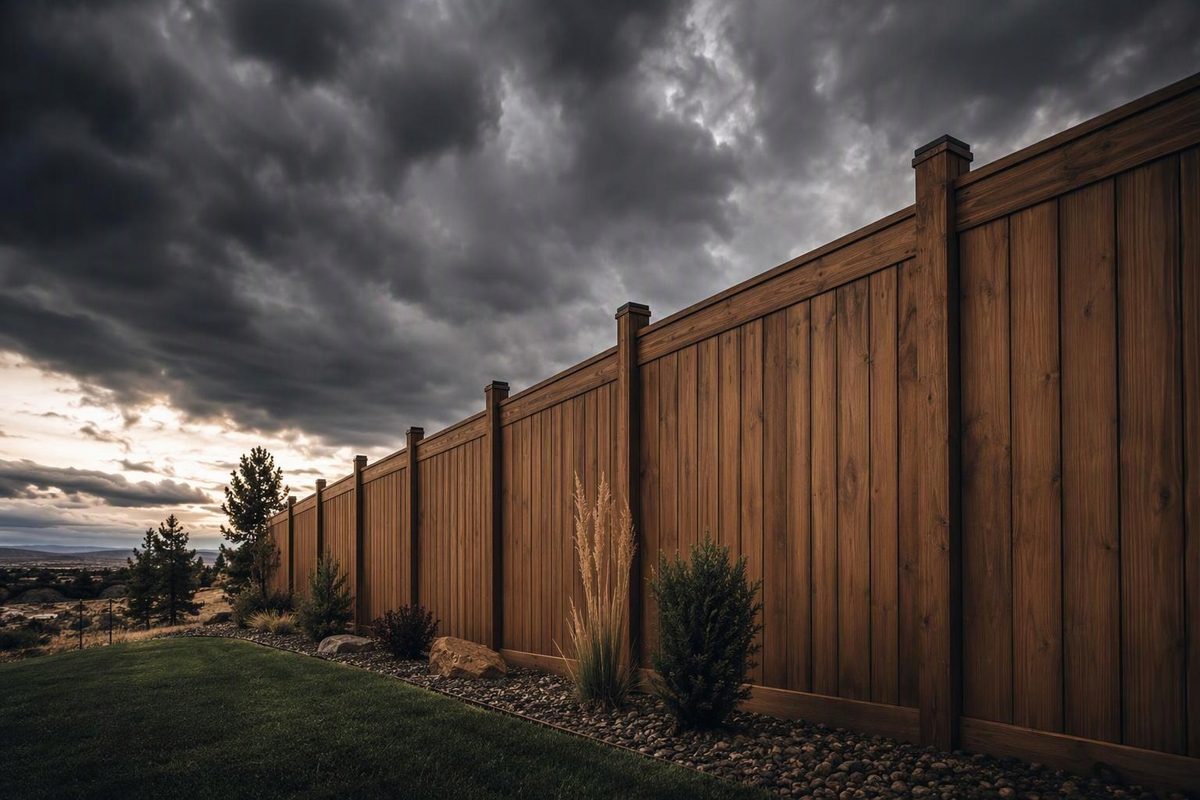
An 8-foot privacy fence is worth considering when a lower fence leaves a specific view exposed. But buy it as a complete system: panels or boards, posts, rails, reinforcement, footings and gates designed for that height. Do not assume taller infill alone is a sound upgrade.
Before choosing wood, vinyl or composite, answer three questions: Is eight feet allowed at this location? Will it block the sightline that matters? And what support does the full-height fence require?
Check height permission separately from permit requirements
“No permit required” does not mean “any eight-foot fence is allowed.” Building-permit exemptions and zoning height limits can be different.
Seattle illustrates the distinction. Its city guidance says a fence eight feet high or less generally does not need a permit if it has no masonry or concrete elements above six feet, with a permit still required in flood-prone areas. Yet in neighborhood residential and multifamily zones, the same guidance generally limits fences to six feet plus two feet of architectural features, such as arbors or trellises—not eight feet of solid screening. Front and street-side setbacks have a four-foot limit. On a sloping site, the guidance allows eight feet if the average height between posts is six feet. These are Seattle’s rules, not a national standard.
Ask your local planning and building departments:
- Is an eight-foot solid fence allowed on the proposed line?
- How is height measured on a slope or above a retaining wall?
- Do caps, lattice and other toppers count toward the limit?
- Are permits, drawings or an exception needed?
- Do corner visibility, setbacks or easements restrict placement?
Check HOA restrictions separately. Verify the boundary before laying out posts; footings must also stay within the permitted location. Master Halco’s installation guidance specifically warns against extending footings beyond property lines and setbacks.
Confirm that the extra height solves the privacy problem
Use a measuring pole to mark the proposed fence top along the route. Check the view from the patio, windows and other places where you want privacy.
A fence that blocks someone standing at ground level may still leave a view from a raised deck or upstairs window. The fence’s position matters as well as its height. If only one area needs screening, compare a permitted local screen with raising the entire boundary fence.
Also distinguish overall height from opaque height. A six-foot solid section with two feet of lattice is eight feet overall, but it does not provide eight feet of solid screening. Check openings between boards, around posts and beside gates—not just the catalog height.
Specify posts and footings before comparing materials
For the same run length, an eight-foot solid fence has one-third more face area than a six-foot solid fence. That is not a wind-rating calculation, but it explains why copying a shorter fence’s support details is a poor starting point.
Manufacturer instructions show how requirements differ:
- Weatherables vinyl: Its currently linked installation guide recommends 40-inch-deep holes for eight-foot fencing installed with concrete. For fences over six feet, or in high-wind areas, it requires reinforcement inside the posts using concrete or aluminum inserts extending at least 22 inches above grade. See the Weatherables installation guide.
- Bufftech Allegheny molded fencing: The guide’s eight-foot section specifies approximately 12-inch-diameter holes, 48 inches deep, with its diagram also referencing frost depth. It uses stacked panels with steel rail stiffeners. See the Bufftech guide, pages 26–27.
These are product-specific examples, not interchangeable footing recipes. Obtain the current instructions for the exact system and have the installer reconcile them with soil, frost depth, exposure and local requirements. A wind claim for a six-foot configuration should not be assumed to cover an eight-foot installation.
For wood, require the quote to identify post material and dimensions, spacing, rail size and count, fasteners and footing details. Master Halco’s solid-board instructions explicitly allow spacing to change with fence height, rails and slope; a generic spacing rule is not an eight-foot design.
Choose the infill by privacy and upkeep
Wood is worth comparing when you want a custom layout. Specify the screening pattern—such as overlapping boards or battens covering joints—rather than ordering “privacy fencing” without a drawing. Our cedar privacy fence comparison explains how to compare designs and material scopes.
Vinyl is worth comparing when you want to avoid routine painting, staining or sealing. Weatherables describes soap-and-water cleaning and offers privacy styles up to eight feet. However, it warns against stacking its panels because posts, rails and reinforcement are designed for a specific height. Choose a purpose-built tall system, not an improvised stack. Weatherables’ product guidance also notes that most panel kits exclude posts. That restriction is specific to its products; the Bufftech example above uses stacking as part of its designed system.
Composite offers another route to solid screening. Check actual dimensions and assembly details: Natures Composites lists an eight-foot-high horizontal tongue-and-groove system whose installation guide specifies a maximum 74-inch post spacing on center. An eight-foot height does not imply an eight-foot panel width. Natures Composites installation guide
Budget the complete installed fence
As a dated material example, on October 6, 2026, Natures Composites listed its 8-foot-high × 74-inch-wide commercial horizontal privacy kit at $681.45. The listing includes boards, top caps, fasteners and one commercial-grade post. That is one manufacturer’s kit price—not a typical installed price for eight-foot fencing. Product listing
Before ordering that kit, confirm the required post length and contents in writing. The listing names a 108-inch post, while its linked installation guide specifies substantially deeper holes than that post would allow beneath an eight-foot above-ground section. The guide also requires an additional end post for each fence line. Do not treat the advertised kit as a verified complete eight-foot installation package.
Request itemized bids covering:
- Fence length, finished height and opaque height.
- Boards or panels, all post types, reinforcement and caps.
- Footing dimensions, excavation, concrete and difficult-ground allowances.
- Gates, bracing, hinges, latches and swing clearance.
- Slope treatment, demolition, disposal, permits, delivery, tax and any finish.
Have the contractor show stepped or sloped sections before ordering. Stepping can create larger bottom openings, and steeper inclines may require longer posts; Weatherables instructs buyers to choose the terrain method before purchasing. Installation guidance
Finally, assign responsibility for the utility locate. In the United States, 811 guidance calls for a request before fence digging, a few business days ahead, with the exact waiting period set by the state. Do not let excavation start before the locate process is complete.