
What a New Fence Costs—and What the Per-Foot Price Leaves Out
Compare installed fence costs by material, calculate a length-based budget, and check posts, gates, site work and exclusions before accepting a quote.
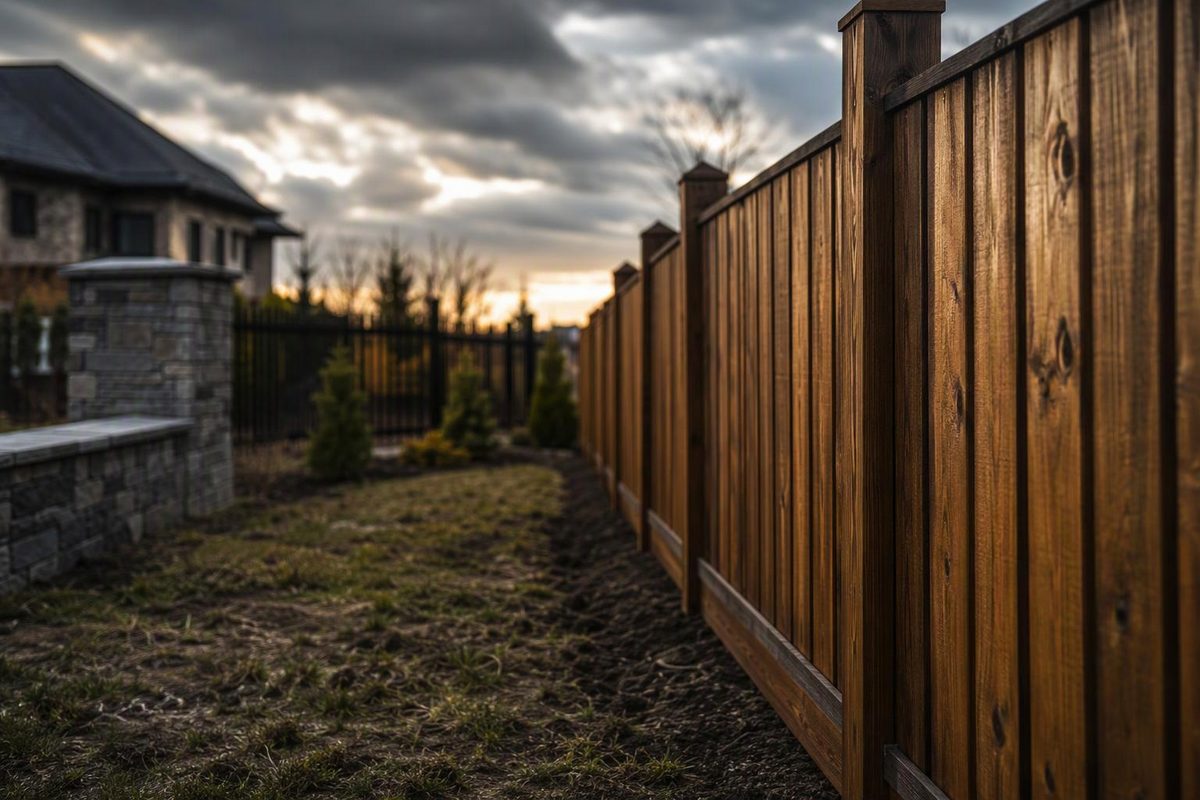
For a 150-foot new fence, published 2026 Ohio installer ranges work out to $3,750–$6,000 for pressure-treated pine privacy fencing or $5,250–$10,500 for vinyl privacy fencing. A basic 4-foot galvanized chain-link run comes in lower, at $2,250–$3,750. These are length-based calculations from Arrow Fence of Ohio’s installed-price guide, not national averages or complete project quotes.
Your useful budget depends on the fence’s job, measured route, post system and installation conditions—not just the material name. All prices below are in U.S. dollars, checked October 24, 2026.
Set the fence’s job and support requirements first
For privacy, price a solid or overlapping design at the required height. For containment, specify height, openings and clearance beneath the fence for the animal you need to keep in. For boundary marking or appearance, an open fence may serve the job without paying for a solid screen. The cheapest open fence is not a substitute for a privacy fence.
Before comparing panel prices, ask each bidder to specify:
- Posts: material, dimensions, spacing and separate gate-post requirements.
- Footings: hole diameter, embedment depth, concrete or other setting method, and allowances for difficult soil.
- Terrain: whether panels will step or follow the slope, and what gaps that leaves underneath.
- Exposure: any reinforcement required by the fence manufacturer for the site’s wind conditions.
Those details can change the material bill and digging labor. For example, Weatherables’ high-wind installation instructions require additional post reinforcement and fasteners for its applicable vinyl privacy systems. That is a product-specific installation requirement, not a universal footing recipe.
Also decide how you will maintain the chosen appearance. If you want stained wood rather than weathered wood, budget the initial finish and future recoating separately. Compare that with vinyl’s cleaning and potential repairs—not with an assumption that either fence has no upkeep. See the fuller vinyl-versus-wood cost comparison.
Installed prices by material
The following are one Ohio installer’s published 2026 planning ranges. Its stated baseline is standard installation with concrete-set posts, level terrain and access for a small skid steer or auger. Heights are shown only where the source specifies them.
| Fence specification | Installed price per linear foot | Calculated cost for 150 feet |
|---|---|---|
| Galvanized chain link, 4 feet high | $15–$25 | $2,250–$3,750 |
| Pressure-treated pine privacy | $25–$40 | $3,750–$6,000 |
| Cedar privacy | $35–$55 | $5,250–$8,250 |
| Vinyl privacy | $35–$70 | $5,250–$10,500 |
| Residential ornamental aluminum | $40–$85 | $6,000–$12,750 |
Source: Arrow Fence of Ohio. Its yard-size examples do not consistently match its per-foot ranges; the totals here use simple multiplication of the listed rates. The guide says standard quotes include one walk gate. Confirm gate, permit, finish and site-work coverage before treating a per-foot rate as an all-in price.
Local offers can differ substantially. JJ’s Fence Company publishes cedar/redwood pricing of $65–$75 per foot installed for its Northern San Diego residential work, reviewed September 2026. That calculates to $9,750–$11,250 for 150 feet. These are different local offers, not evidence that the higher-priced contractor is overcharging—or a controlled comparison of identical fences. Its guide is inconsistent about whether demolition is included, so confirm removal coverage in the written quote. (San Diego pricing guide)
Nor are the table’s options equivalent: 4-foot chain link is open and shorter than many privacy designs. For closer comparisons, use the same height, gate layout and installation scope. Our chain-link-versus-wood cost guide explains the specifications that can narrow the apparent price gap.
Turn the route into a complete budget
Measure the actual fence route rather than estimating from acreage. Sketch each run, corner and gate opening. Ask whether the contractor’s billed footage includes the gate openings; otherwise, multiplying the full route and then adding gates can count part of the work twice.
Use this structure:
Complete budget = priced fence runs + separately priced gates + site work + approvals + finish and delivery items not already included.
Check these potential additions:
- Gates: width, frame, support posts, hinges, latch and any automation.
- Site work: clearing, roots, rock excavation, slope work and restricted access.
- Existing fence: demolition, old footings, loading and disposal. Replacement needs a different scope; see fence replacement costs.
- Approvals and boundary work: local permits, HOA requirements and any surveying needed to establish the route.
- Completion items: staining, delivery, tax, cleanup and landscape repairs.
Home Depot’s installation cost guide identifies gates, removal, permits, terrain and custom modifications as cost factors. Do not automatically add allowances for them if the bid already includes them.
For DIY, replace the installed rate with a complete materials list: panels or fabric, posts, rails, fittings, fasteners, footings and gates, plus delivery, tools, rentals and disposal. A panel-only total is not a materials budget.
Compare written scopes, not just totals
Give contractors the same route sketch and specification. Request the measured footage, height, wood species and board dimensions or manufactured fence brand and model, post and footing details, gate schedule, exclusions and price-validity date in writing. For chain link, specify wire gauge, mesh size and coating. Ask how unexpected rock or other excavation problems will be authorized and charged.
Before digging, confirm who will arrange the utility locate. 811 specifically identifies fence installation as a project requiring contact before excavation; follow your state’s waiting period and safe-digging requirements.
Choose between complete, comparable offers. A lower quote is useful only after you know whether it buys the same fence and leaves you with the same amount of unfinished work.