
Does Insurance Cover a Fence Damaged by a Fallen Tree?
Learn when homeowners insurance covers tree damage to a fence, whose policy to contact, and how deductibles, depreciation and removal affect payment.
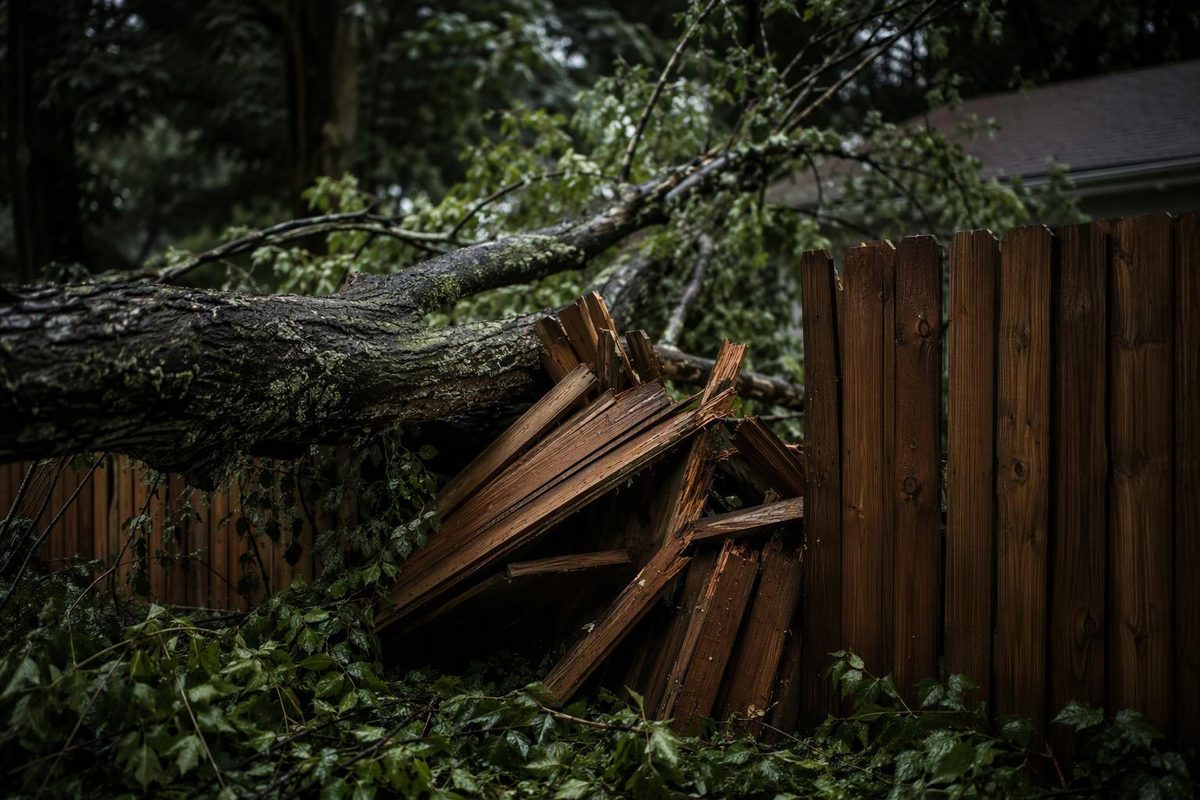
Usually, yes—if you own the fence and the tree damage results from a cause your homeowners policy covers. A residential fence typically falls under other structures coverage, rather than the coverage for the house itself. A healthy tree falling onto a fence may qualify for repair or replacement and removal of the debris needed to make those repairs, according to Allstate’s fence-damage guidance.
Coverage does not necessarily mean a check for a whole new fence. Your deductible, coverage limit, loss-settlement terms and the extent of the damage determine what the insurer pays. This guide concerns U.S. homeowners policies; farm, commercial and association-owned fences need a separate policy check.
Whose tree fell—and whose insurance pays?
Your tree fell on your fence
Contact your own homeowners insurer. Ask whether the cause of the fall is covered and whether your fence is included under other structures coverage. Allstate says repairs are likely covered when a healthy tree falls onto the fence, but that is not a guarantee for every policy or circumstance.
Do not assume that old rot, loose posts or deferred maintenance will be paid for along with new impact damage. Most home policies exclude wear and tear, as the Texas Department of Insurance’s home insurance guide explains. Have the contractor distinguish damage caused by the tree from pre-existing deterioration.
Your neighbor’s tree fell on your fence
Start with your own insurer, not a demand that your neighbor pay. Tree ownership alone does not make the neighbor responsible for storm damage. Allstate’s fence guidance says to file with your own insurer when a neighbor’s tree lands on your fence; the Texas Department of Insurance explains that the neighbor’s policy probably will not pay unless the neighbor was at fault.
Negligence can change the outcome. If the neighbor had been notified that the tree was unsafe and did nothing, your insurer may seek recovery from their insurer through subrogation. A successful recovery may also return your deductible, according to the Oklahoma Insurance Department. Preserve dated photographs, arborist reports and prior written notices if they exist; a fallen tree by itself is not proof of negligence.
If the fence is shared or association-owned, establish ownership and ask which policy applies before authorizing permanent replacement.
What can reduce the payment?
Find the declarations page, then ask the insurer these three questions:
- Which deductible applies? Confirm whether the loss uses your ordinary deductible or a separate wind or named-storm deductible. If it is a percentage, ask what dollar amount that means: it may be based on the home’s insured value, not the fence repair bill, as Texas’s Office of Public Insurance Counsel explains.
- What is the other structures limit? This coverage may protect several detached structures, not just the fence. Allstate explains that the limit may be based on a percentage of dwelling coverage.
- How is the fence valued? Ask specifically whether the fence settles at replacement cost or actual cash value. Do not assume the house’s replacement-cost coverage automatically answers the fence question.
Actual cash value means replacement cost minus depreciation for age and wear. Replacement-cost coverage uses current repair or replacement prices, subject to policy terms, limits and the deductible. The Texas insurance guide explains this distinction.
Illustrative calculation—not a repair-price estimate: If the insurer accepts $3,000 of covered repairs and the applicable deductible is $1,000, the payment would be $2,000 before any other adjustments. If the fence settles at actual cash value, depreciation can reduce that payment further. A repair below the deductible may produce no payment.
Also separate wind and tree-impact damage from flooding. Most homeowners policies exclude flood damage, and wind coverage can vary by policy and location. Do not treat everything that happened during one storm as automatically covered under one policy.
Is tree removal covered too?
Removing a tree from a damaged insured fence may be covered so repairs can proceed, but confirm the debris-removal allowance and any separate limit. Allstate identifies this as a likely part of a covered fence loss.
A tree that lands in the yard without damaging an insured structure is a different matter. Removal usually is not covered, although some policies have exceptions, such as a blocked driveway, according to Texas insurance guidance. Ask the tree contractor to itemize removal separately from fence work.
Document the fence—not just the fallen tree
Once the area is safe:
- Photograph before moving anything. Capture the full run, tree impact, damaged posts, rails, panels, gates and visible footings. Stay away from downed wires and unstable trees.
- Notify the insurer promptly. Ask what it needs inspected before permanent repairs. Make safe temporary repairs to prevent further damage and keep receipts, as TDI recommends.
- Get an itemized fence estimate. Specify damaged length, height, material, post and footing work, gate alignment, demolition, disposal and labor. Ask the contractor to check adjacent posts rather than pricing only the visibly broken panel.
- Separate repair from upgrades. Show restoration of the existing fence separately from added height, privacy screening or a different material. Ask the adjuster what scope is approved before ordering.
Use our fence replacement cost and quote checks to review the contractor’s scope. The useful comparison is the complete repair estimate against the insurer’s approved scope and settlement—not a new-fence price per foot against the deductible alone.