
Choose the Right 6×6×10 Fence Post
Choose 6×6×10 pressure-treated lumber by actual size, UC4A/UC4B rating, grade, straightness, hardware fit, usable height and retail prices before you buy.
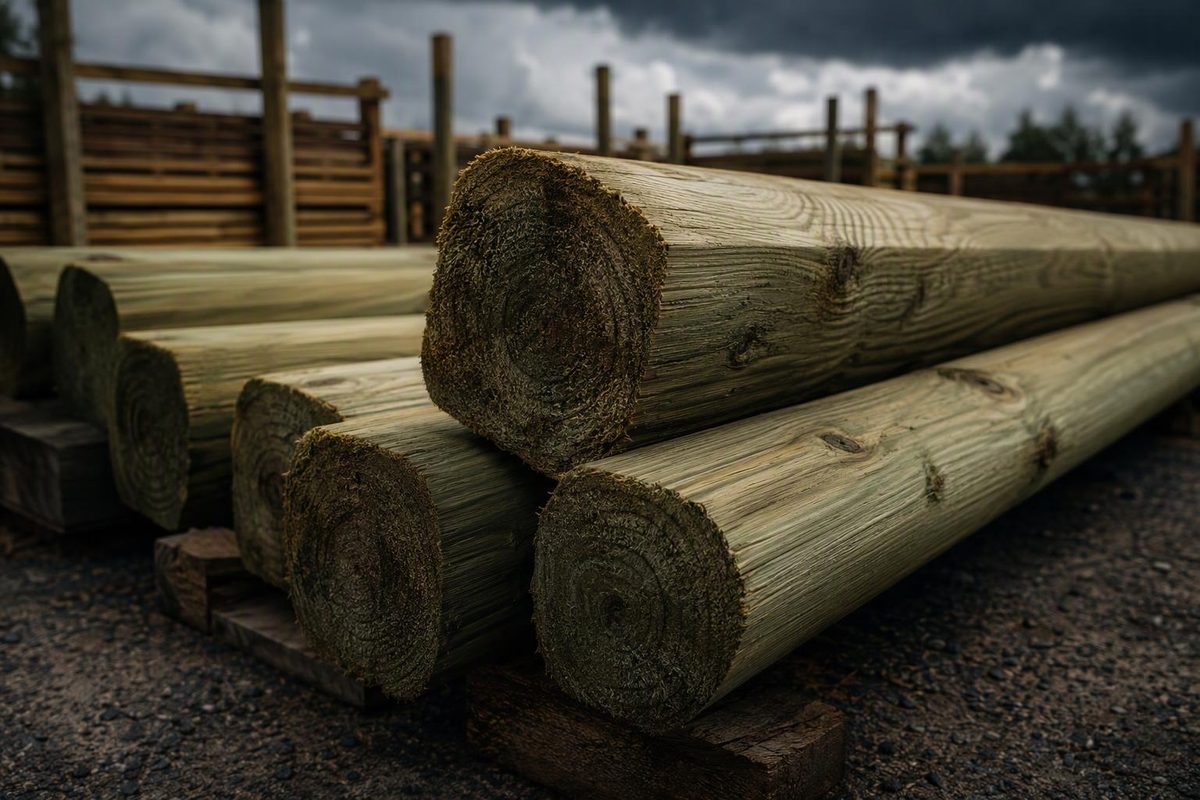
A 6×6×10 pressure-treated timber makes sense for a large gate, heavily loaded corner or tall fence, but it is often more post than an ordinary residential line needs. Buy it when the load, exposure and approved design justify it—not simply because “6×6” sounds durable.
Enter the required height, embedment and top trim to see whether a 10-foot post is long enough.
10-Foot Post Height Check
The available length matches the required 7 ft height.
Enter valid values for all three fields.
What 6×6×10 Actually Means
| Listed specification | What it usually means |
|---|---|
| 6 in. × 6 in. | Nominal size; commonly 5½ in. × 5½ in. actual |
| 10 ft. | Full post length before trimming and embedment |
| Pressure treated | Preservative was forced into the wood; the required treatment level still depends on exposure |
| Ground contact | Look for AWPA UC4A or a higher category on the end tag |
| No. 2 | A structural grade rather than an appearance grade; knots, wane and checking may be present |
Retailer listings illustrate the difference between nominal and actual size. Lowe’s identifies one Southern yellow pine 6×6×10 as 5½ × 5½ inches by 10 feet, while Menards lists the same actual dimensions for its 6×6×10 timber.
The federal softwood lumber standard defines nominal size as a label that does not represent dressed size. It classifies lumber at least 5 inches in its smallest nominal dimension as timber (NIST PS 20-20).
At 5½ by 5½ inches and 10 feet long, the timber contains about 2.10 cubic feet of wood. Do not rely on one advertised weight: moisture remaining from treatment can make otherwise similar posts differ substantially, and a wet 10-foot timber can be difficult for one person to control.
A 10-Foot Post Leaves Less Than 10 Feet Above Grade
Subtract planned embedment and top trim from 10 feet. A post embedded 3 feet leaves at most 7 feet above grade before trimming. That arithmetic does not establish the required hole depth.
Fence height, wind exposure, soil, frost depth, post spacing and gate loads all affect the post and footing. Start with the project’s approved design and local requirements rather than a universal “one-third in the ground” rule. Our fence post size guide explains how those variables change the choice.
A 6×6 is most defensible for:
- Hinged gate posts, especially where a long or solid gate creates substantial leverage
- End and corner posts carrying wire tension
- Tall privacy-fence posts exposed to substantial wind
- Posts carrying another structural feature where the approved design specifies a 6×6
It may be unnecessary for ordinary line posts. A larger timber costs more, is harder to handle and may require a larger hole or footing. Brackets, bases and caps must fit its actual dimensions.
The End Tag Must Show the Treatment Category
A green or brown tint does not establish where lumber may be used. The American Wood Protection Association says ground-contact applications require UC4A or higher. Its homeowner guidance says an AWPA-compliant end tag should identify AWPA U1, the Use Category, preservative and retention. Material used in code-regulated work should also carry the quality mark of an accredited agency (AWPA homeowner guidance).
For a conventional sawn fence post in ordinary ground-contact service, UC4A is the usual starting point. AWPA defines UC4A to include sawn fence posts and other wood exposed to soil, fresh water or comparable deterioration hazards. UC4B covers heavy-duty ground contact, including high-decay environments and critical or difficult-to-replace components (AWPA U1-24 excerpt).
UC4B may be worth specifying for a difficult-to-replace gate post, a severe decay environment or a design that explicitly calls for it. It is not automatically necessary for every backyard fence. “Pressure treated” without a readable exposure rating is incomplete information.
Two Retail Listings Differ in Treatment Detail
As a retail snapshot captured September 24, 2026:
- Lowe’s displayed $52.38 for a No. 2, ground-contact Southern yellow pine 6×6×10 on its product listing.
- Menards displayed $53.99 before its mail-in rebate for a No. 2 Southern yellow pine UC4B 6×6×10 timber.
These examples do not establish a national price range. Lumber prices, inventory and store settings change. The products also are not treatment-equivalent: one listing says ground contact, while the other specifically says UC4B.
Compare the complete end-tag specification, pickup availability and delivery charge—not just “6×6×10.”
Inspect Every Post Before Loading It
Sight down all four faces. Reject a post with a pronounced bow or twist, especially for a gate where hinge alignment matters. No. 2 material can legitimately have knots, checking and wane, but avoid defects concentrated where bolts, hinges or rail connections must go.
Check these five details:
- Actual dimensions: Confirm brackets, post bases and caps fit 5½ inches rather than a true 6 inches.
- End tag: Verify UC4A or the higher category required by the project.
- Grade and species: Do not assume every treated timber has the same structural properties.
- Moisture and straightness: Wet posts can shrink and change shape as they dry.
- Length: Leave enough material for embedment and a clean top cut.
Hardware and Field Cuts Need Corrosion and Decay Protection
The American Wood Council’s residential deck guide specifies hot-dip galvanized, stainless-steel, silicon-bronze or copper fasteners for preservative-treated wood and gives the applicable ASTM coating standards. It also says the fasteners and connectors in a connection should use the same corrosion-resistant material. Its prescriptive deck details require stainless steel within 300 feet of a saltwater shoreline (AWC deck construction guide).
For a fence, follow the lumber treater, hardware manufacturer and applicable local code when their requirements are more specific.
Plan cuts and holes before setting the post. AWPA explains that preservative penetrates different wood tissues unevenly and says exterior ground-contact cuts and drilled holes must receive an appropriate field preservative such as copper naphthenate (AWPA guidance for code officials).
Keep the factory-treated end in the most demanding exposure when practical. Treat every field cut as directed, and do not assume stain substitutes for preservative.
Correct treatment, drainage and installation matter as much as post thickness. See how long pressure-treated lumber lasts in a fence before paying extra for a 6×6 where a better-specified post or footing would solve the real problem.