
Choose and Install Chain-Link Fence Hog Rings Correctly
Learn what chain-link hog rings do, how to match gauge and finish, calculate quantity, choose spacing, and attach fabric to tension wire.
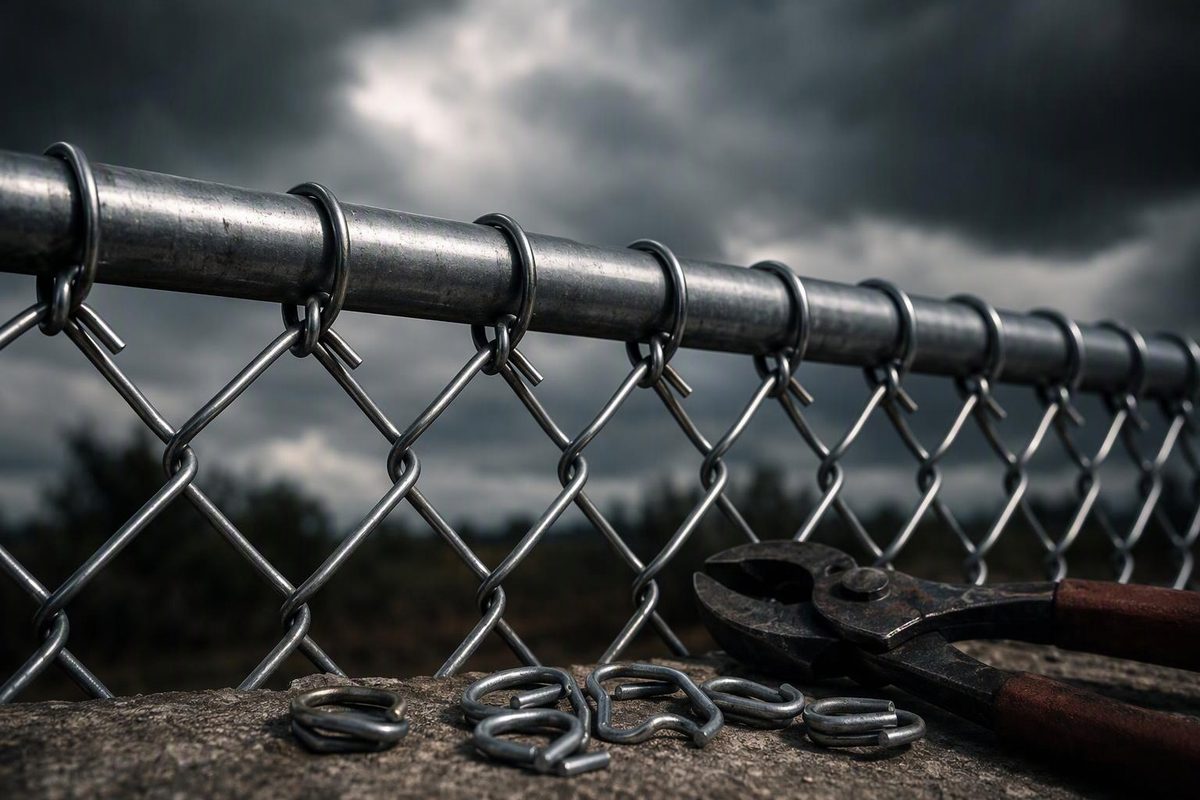
Chain-link fence hog rings are C-shaped wire fasteners that join fence fabric to tension wire. They normally secure the fabric’s bottom edge to bottom tension wire. On a system without top rail, a specification may also call for top tension wire and hog rings.
Hog rings are not substitutes for the ties that secure fabric to line posts and top rail, and they do not stretch loose fabric. The tension wire and fabric must be stretched first; the rings then keep the two components together.
The practical specification
For a repair, match the existing rings’ material, coating and approximate open size. For a new system, follow its instructions or project specification rather than buying by appearance alone.
| Decision | Practical starting point |
|---|---|
| Purpose | Attach chain-link fabric to tension wire |
| Spacing | 18–24 inches for many conventional installations |
| Commercial specification | Often 9-gauge ring wire |
| Material and finish | Galvanized steel, aluminum or polymer-coated as specified for the fence system |
| Tool | Hog-ring pliers compatible with the selected ring |
Spacing is not universal. The Chain Link Fence Manufacturers Institute’s commercial, industrial and security guide specifies 9-gauge hog rings at 18 inches on center. It also places lower tension wire 4 inches above the fabric’s bottom edge and requires the wire to be stretched independently before the fabric (CLFMI specification). A residential installation guide distributed by Orange Coast Fence instead calls for hog rings no more than 24 inches apart (residential installation guide).
Treat 24 inches as a common residential maximum, not a rule for every fence. Use the tighter spacing required by project documents, particularly for commercial, security or animal-containment work. Extra rings cannot compensate for loose fabric, weak posts or slack tension wire.
Choose gauge, fit and finish as a system
Wire gauge can be confusing because a lower gauge number denotes thicker wire. CLFMI’s guide lists 9-gauge, 0.148-inch aluminum rings for standard applications and 9-gauge galvanized-steel rings for added-security applications. For polymer-coated systems, it says to match the fabric’s coating class and color (CLFMI specification). Master Halco’s galvanized-fence specification likewise calls for 9-gauge galvanized steel or aluminum hog rings conforming to ASTM F626 (Master Halco specification).
That does not mean every residential package is 9 gauge. Lighter rings are sold for residential systems. Nor is there one open-ring diameter for every installation: the ring must fit around a fabric strand and the tension wire, close properly, and work with the selected pliers. Check the package and system instructions rather than assuming the fabric and hog rings must have the same gauge.
For material and finish:
- Use the specified galvanized-steel or aluminum rings with a galvanized system.
- Use color-matched polymer-coated rings on black, green or brown fabric when appearance and coating continuity matter.
- Avoid bare, indoor-grade fasteners outdoors.
For more on zinc coatings and fabric specifications, see galvanized chain-link fence gauge and coating.
How many hog rings to buy
Calculate each tension-wire run separately and exclude gate openings:
Rings needed = tension-wire length ÷ selected ring spacing, rounded up
Keep the units consistent. At 18-inch spacing, a 100-foot run needs about 67 rings; at 24 inches, it needs 50. Buy a modest surplus for dropped or malformed rings and later repairs. If both upper and lower tension wires receive rings, calculate both runs.
Do not use a “one ring per foot” package estimate unless that is the spacing required for the job.
Installation sequence
- Inspect the structure. Correct leaning posts, failed terminal connections and torn fabric first. Hog rings only connect fabric to wire.
- Install and tension the wire. Run it on the same side of the posts as the fabric. Secure and stretch it between terminal posts before attaching the fabric.
- Stretch and terminate the fabric. Attach each end with a tension bar and bands, then secure the fabric to line posts and rail with the specified ties. See chain-link fence top rail sizes and installation for the upper assembly.
- Load the pliers. Seat the open ring in compatible hog-ring pliers, then place its legs around one fabric strand and the tension wire.
- Close the ring. Squeeze until it securely captures both wires without a projecting end that can snag skin, clothing or an animal. Do not tighten so aggressively that the ring cuts a polymer coating. A fastener manufacturer shows the basic plier sequence (King Steel Fasteners).
- Repeat at measured intervals. Work along the run while checking that the fabric remains at the intended height and follows the grade.
Repairing missing or rusted rings
Replace isolated missing rings with compatible fasteners and pliers. If many have failed, inspect the tension wire itself. Severe corrosion, slack wire or a broken terminal attachment requires wire repair or replacement before installing new rings.
A loose fence bottom may also indicate fabric that was never stretched correctly. Hog rings can hold the fabric edge to sound tension wire; they cannot restore tension to the whole fence.