
How Deep Should Fence Posts Be? Depth, Frost and Post Length
For a post standing 6 feet above ground, start with 24–36 inches buried. Check how gravel, frost, gates and product instructions change the hole depth.
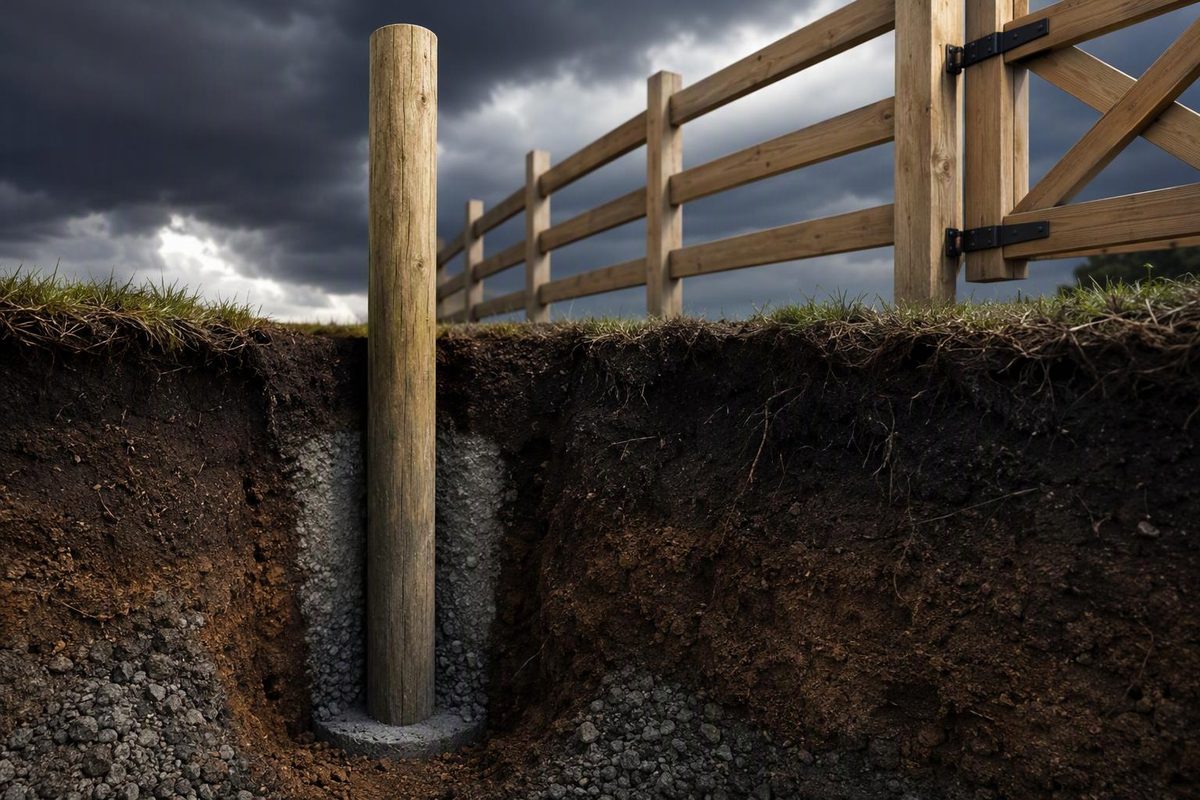
For a fence post standing 6 feet above ground, 24–36 inches of buried post is a useful starting range—not a universal specification. QUIKRETE’s post-setting guide specifies a hole depth equal to one-third to one-half of the post’s above-ground length, plus 6 inches for gravel beneath the post. Under that method, the excavation would be 30–42 inches deep. Local frost requirements and the fence system’s instructions can require a different footing. QUIKRETE’s guide
The important distinction is between how much post is buried and how deep the entire hole goes. They are not always the same measurement. Use the actual exposed post height, which may differ from the panel height.
A starting depth chart
These figures apply QUIKRETE’s general rule to the exposed post height. They are planning calculations, not approved designs for every fence or soil.
| Post height above ground | Buried post: one-third to one-half of exposed height | Total hole depth with QUIKRETE’s 6-inch gravel base |
|---|---|---|
| 4 feet | 16–24 inches | 22–30 inches |
| 5 feet | 20–30 inches | 26–36 inches |
| 6 feet | 24–36 inches | 30–42 inches |
| 8 feet | 32–48 inches | 38–54 inches |
The gravel allowance belongs to that installation method; do not automatically add it to another manufacturer’s specified hole depth. Source for the calculation
Avoid the “one-third of the post” mix-up
One-third of the above-ground height is different from one-third of the total post length:
- A post with 6 feet exposed and 2 feet buried is 8 feet long. Its buried portion is one-third of the exposed height, but one-quarter of its total length.
- Burying one-third of the total post while leaving 6 feet exposed requires a 9-foot post, with 3 feet underground.
Specify the buried depth in inches rather than asking a supplier or contractor for “one-third.”
What changes the final depth?
Frost and local requirements
Do not assume a 24-inch embedment is sufficient in a freezing climate. Ask your city or county building department what frost-protection depth and fence-footing requirements apply to your project. Trex Fencing FDS specifically notes that soil and climate affect depth and that local departments may have guidance or requirements. Trex Fencing FDS guidance
Ask whether the required dimension refers to the post embedment, bottom of concrete, or total excavation. Gravel below a post does not increase the length of post embedded in concrete.
The fence system
Use the current installation guide for the actual product rather than transferring a wood-post rule to every material. For example, a retailer-hosted Trex Seclusions guide dated 2013 specifies 12-inch-diameter holes, 30 inches deep or below the frost line. That illustrates a system-specific hole specification—not a blanket requirement for all 6-foot fences. Confirm the instructions supplied for the system you buy. Trex Seclusions installation guide
Gates, wind and soil
Gate posts deserve a separate footing specification. Hoover Fence’s chain-link installation manual says gate-post holes are typically wider and deeper because of the additional stress from a moving gate. It also recommends considering closer spacing and heavier framework when adding privacy slats or screening that increase wind load. Extra depth alone is not a substitute for suitable posts and spacing. Hoover Fence installation manual
Loose or sandy soil also changes the installation. QUIKRETE recommends tube forms for those conditions; do not assume the same narrow hole will work in every soil. QUIKRETE’s soil guidance
Check these dimensions before buying posts
Write down the required exposed post height, buried post length, hole depth and hole diameter separately. For a straightforward post, minimum post length equals exposed height plus buried length. A 6-foot exposed post with 36 inches buried therefore needs at least 9 feet of usable length; gravel beneath it does not count toward that length.
On a stepped fence, the downhill post may need to stand taller to meet the upper panel. Buy a longer post rather than sacrificing embedment to gain height. The Trex guide expressly notes that stepped installations can require taller posts. Trex terrain instructions
Before digging in the U.S., contact 811 and follow your state’s waiting and safe-digging requirements. Fence installation is specifically identified as a project requiring a locate request. 811 before-you-dig guidance
For a contractor quote, request the line-post and gate-post dimensions, embedment depths, concrete footing diameters and frost allowance in writing. Once those are settled, use our guide to concreting a fence post to plan placement and concrete quantity.