
Picket Fence Spacing: Choose a Gap and Calculate the Layout
Choose a clear picket gap, calculate even spacing between posts, and account for wood movement, gates, slopes and pool-barrier requirements.
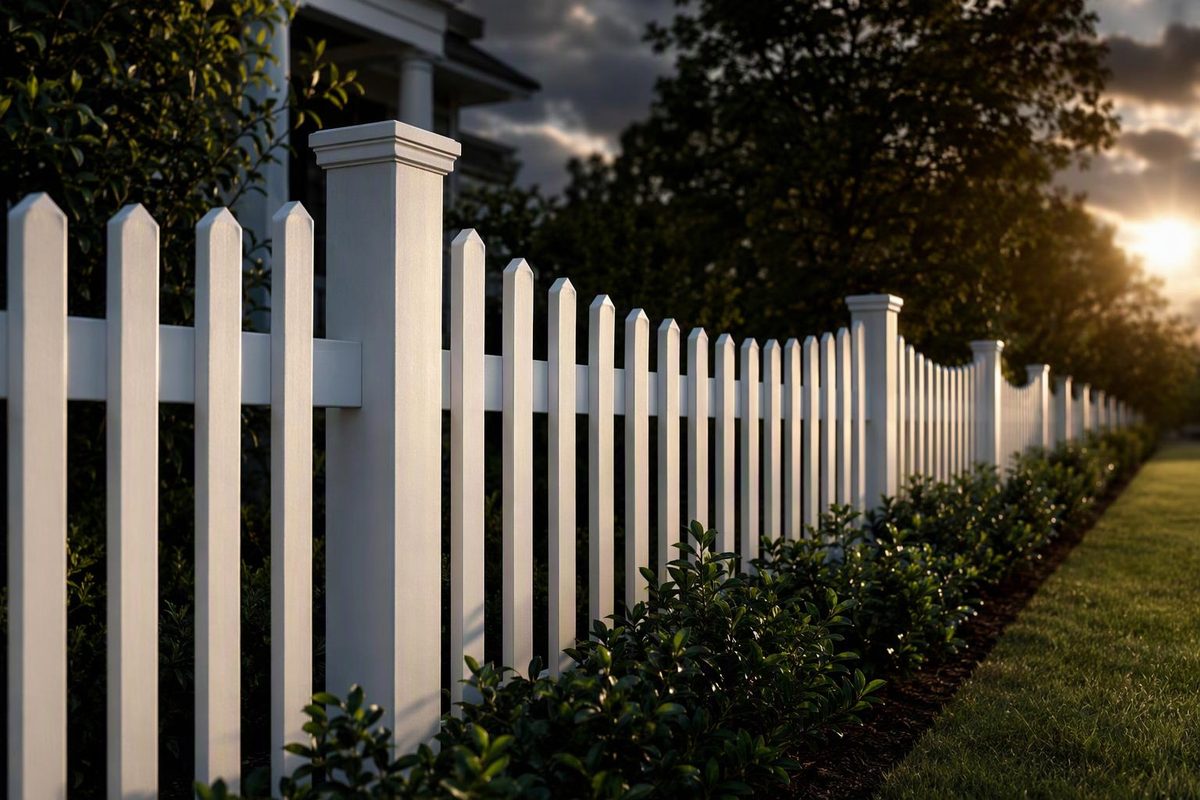
For a decorative wood picket fence, 2½ inches of clear space between pickets is a practical starting point, not a universal requirement. America’s Fence Store uses that gap in its picket-fence building guide. Adjust it to suit the appearance, actual board width and available space—but settle any containment or pool-barrier requirements first.
“Spacing” should mean the edge-to-edge opening, not the distance between picket centers. A 3½-inch-wide picket with a 2½-inch gap repeats every 6 inches on center.
Choose the gap for the fence’s job
For an appearance-only fence, mock up several pickets before committing. Narrower gaps give a denser look and require more boards; wider gaps open the view and reduce the picket count. Compare the gap with the board width rather than judging the gap alone.
For pet containment, don’t assume a decorative spacing will work for your animal. Check the proposed openings, including those beside posts, under the fence and around the gate. Spacing alone does not address jumping or digging.
A pool barrier needs a separate design check. The U.S. Consumer Product Safety Commission’s residential pool-barrier guidelines (Publication 362, August 2012) recommend:
- When the distance between the tops of horizontal rails is less than 45 inches, put those rails on the pool side and keep openings between vertical members and within decorative cutouts no larger than 1¾ inches.
- With rail-top spacing of 45 inches or more, vertical-member spacing should not exceed 4 inches; decorative cutouts still have a 1¾-inch limit.
These are federal safety recommendations, not a nationwide fence code. Confirm the locally required barrier height, openings, bottom clearance and gate provisions before buying materials. A 2½-inch decorative gap is too wide for the first configuration.
Calculate equal spacing between posts
Measure the actual space you intend to fill. An 8-foot post-center distance is not a 96-inch clear opening between post faces. Establish the posts and rails using the fence’s structural layout, then calculate the pickets within each bay. See our fence-post installation guide for that earlier stage.
Measure several pickets, too. Use their actual width—not a nominal size printed on a label.
For a bay with the same gap between every picket and at both post faces:
Gap = (clear bay width − total picket width) ÷ (number of pickets + 1)
If all pickets have the same width, total picket width is simply the count multiplied by that width.
Worked example
Assume a measured 96-inch clear bay and pickets that actually measure 3½ inches wide:
| Pickets in the bay | Width occupied by pickets | Equal gaps, including both ends | Calculated clear gap |
|---|---|---|---|
| 16 | 56 inches | 17 | About 2.35 inches |
| 17 | 59½ inches | 18 | About 2.03 inches |
For a target near 2½ inches, 16 pickets is the closer choice. For a denser layout near 2 inches, use 17. Neither produces exactly the target gap because pickets come in whole numbers.
If the first and last pickets sit flush against the bay boundaries, there are only count minus one gaps:
Gap = (bay width − total picket width) ÷ (number of pickets − 1)
For unequal end gaps, use:
Interior gap = (bay width − total picket width − left end gap − right end gap) ÷ (number of pickets − 1)
The last two formulas require at least two pickets. Don’t mix these layouts in one calculation.
Transfer the layout without accumulating error
Mark or dry-fit the entire bay before fastening it. Avoid rounding every gap and leaving the accumulated difference beside the final post.
Use a spacer cut to the planned clear gap, a string line for the picket tops and a level to keep the boards plumb. Lowe’s installation guide recommends spacers for decorative picket fences and frequent plumb checks. Recheck the remaining space periodically, especially if board widths vary.
On sloping ground, keep the gap measurement horizontal between plumb pickets; measuring along a sloping rail gives a different distance. Also check the bottom openings wherever the grade changes.
Wood can shrink as it dries and swell as it gains moisture, so installation-day gaps are not necessarily permanent. The USDA Wood Handbook explains this moisture-related dimensional movement. Shrinking pickets can widen the openings. Where an opening limit matters, leave allowance for movement rather than building exactly to the maximum, and recheck gaps as the wood dries.
Calculate a gate’s picket layout separately from the fence bays. Its hinge and latch clearances belong to the hardware layout, not the decorative picket gap; our gate-hinge selection guide covers those measurements. For a contractor quote, request the actual picket width, clear gap, end-gap treatment and gate clearances—not just “standard picket spacing.”