
How to Build a Rabbit-Proof Fence That Closes Ground-Level Gaps
Use 1-inch mesh, 24 inches of clear height and a buried edge or staked apron to keep rabbits out of gardens, gates and existing fences.
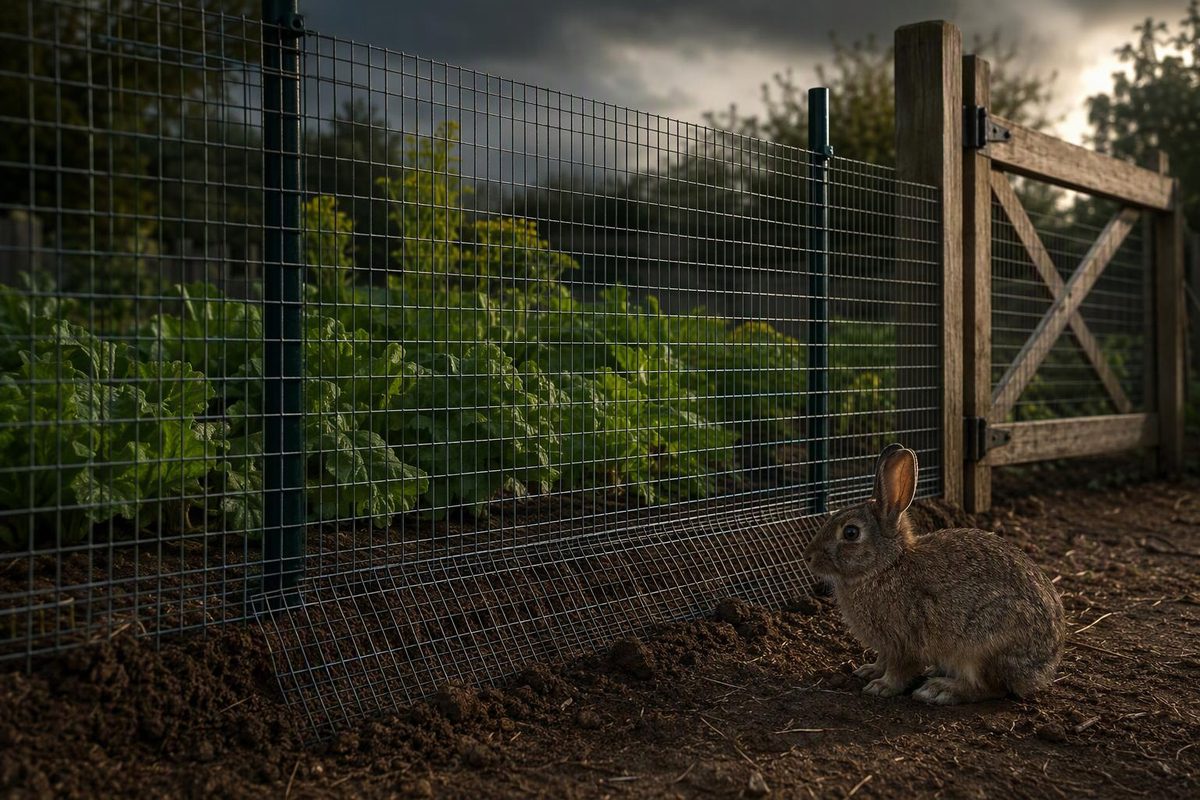
For a typical garden exposed to cottontail rabbits, start with 1-inch wire mesh, 24 inches of clear height and no opening at ground level. Bury the bottom about 6 inches or secure a 12-inch apron flat on the rabbit side. Use 36 inches of clear height where larger hares are present. In snow country, increase the total height enough to preserve the required clearance above the anticipated snow surface.
The mesh opening and bottom detail matter more than building a tall, heavy fence. Rabbits and hares are more likely to go under a fence than over it, according to the Washington Department of Fish and Wildlife.
A practical rabbit-fence specification
| Part | Starting specification | Why it matters |
|---|---|---|
| Mesh opening | 1 inch | Excludes rabbits without requiring heavy fence fabric |
| Height above grade | 24 inches | WDFW’s starting height for rabbit exclusion |
| Height for larger hares | 36 inches | Reduces the chance of hares clearing the fence |
| Buried edge | About 6 inches | Prevents animals from working under the bottom |
| Alternative apron | 12 inches wide, laid outward and firmly staked | Avoids a continuous trench |
| Post spacing | 4–6 feet | Supports lightweight mesh and limits sagging |
| Gate clearance | As small as practical, with no loose bottom corner | Keeps the entrance from becoming the easiest route |
These dimensions follow WDFW guidance: a 2-foot fence made with 1-inch chicken wire and supported every 4–6 feet can exclude rabbits from an enclosed area. The agency advises increasing the height to 3 feet for larger hares and either burying the bottom 6 inches, securing it flush to the soil or installing a 1-foot apron on the animal side.
Treat these as starting dimensions rather than a guarantee for every site. Grades, erosion, frost movement and accumulated snow can open a route that did not exist when the fence was installed.
Choose the wire by the job
Galvanized poultry netting is an economical choice for a seasonal vegetable garden. Its hexagonal wire is easy to shape, but it needs regular support and a well-fastened bottom because it flexes.
Welded wire or hardware cloth makes a straighter, more rigid barrier. It is especially useful at gates, corners, raised beds and individual tree guards. Confirm the actual opening instead of relying on the product name: hardware cloth comes in several mesh sizes.
Existing wood, ornamental or chain-link fences can be retrofitted instead of replaced. WDFW recommends covering the lower 2–3 feet of an existing fence or gate with 1-inch mesh, attaching it at enough points to prevent sagging and closing the route underneath. Standard chain-link fabric may have openings too large for this purpose, so its strength does not eliminate the need for a small-mesh liner. When comparing chain-link material, keep mesh opening separate from wire gauge and coating; our galvanized chain-link specification guide explains those measurements.
Electric netting is another temporary option, but it demands inspection. WDFW says to inspect it daily during the first three weeks after installation and warns that rabbits can chew through poorly maintained wires, leaving sections inoperative. A simple non-electric wire barrier is generally easier to check around a small garden.
Buried edge or surface apron?
Choose the bottom detail before buying the roll because it changes the required width:
- A fence with 24 inches exposed and 6 inches buried needs at least 30 inches of mesh width.
- A fence with 24 inches exposed and a 12-inch surface apron needs at least 36 inches.
- Allow additional width where the ground is uneven or the mesh must overlap a frame.
A buried edge is tidy but requires trenching around the enclosure. Contact 811 before digging either the trench or post holes. The national 811 service notes that some utilities lie only inches below the surface and that shallow digging still requires a locate request a few days in advance (811 Before You Dig). Also verify property lines, easements and local fence rules before placing a permanent enclosure; the required checks depend on the address and project, as covered in our fence permit planning guide.
A surface apron is easier around roots and rocky soil. Lay it flat on the outside, facing the approaching rabbit. Remove humps and stake both the bend and outer edge. Mulch can lightly conceal the wire, but it should not replace stakes or leave the apron floating above low spots.
Installation sequence
- Confirm the animal and route. Rabbits leave cleanly clipped vegetation rather than the ragged damage associated with deer browsing. Inspect the perimeter for tracks, droppings, scraped soil and worn paths before laying out the barrier.
- Plan a complete enclosure. Ending the mesh beside a shed, deck or old fence works only if the joint and ground-level openings are closed.
- Set sturdy posts 4–6 feet apart. Add support at corners, changes in grade and the gate. Follow the requirements for the selected post system rather than applying one universal depth; soil, frost and gate loads can change post and footing needs. See fence post sizing factors.
- Trench or prepare the apron strip. Smooth abrupt grade changes. Step the fence where necessary rather than pulling the mesh diagonally and creating triangular openings.
- Attach the mesh. Keep it upright and reasonably taut without distorting the openings. Use enough fasteners that an animal cannot push between attachment points.
- Close the bottom. Backfill a buried edge or pin an apron firmly against the soil. Add stakes in dips and soft ground.
- Treat the gate as part of the barrier. Continue the small mesh across it, reinforce the bottom corners and minimize gaps at the latch and hinges. A threshold, paver strip or rigid wire apron can close an irregular opening beneath a swinging gate.
Snow changes the effective height
A 24-inch fence measured from bare soil becomes a shorter barrier when drifted or piled snow raises the surrounding surface. Preserve the intended clear height above the anticipated snow line rather than relying on the fence’s bare-ground measurement.
Individual tree guards need a more conservative snow allowance. The University of Minnesota Extension recommends a cylinder of 1/4-inch hardware cloth about 6 inches from the trunk, extending 18–24 inches above the anticipated snow line and leaving no gap at the ground. Enclose reachable lower branches and leave room for growth.
Inspect the weak points
Walk the fence after heavy rain, frost movement, mowing and winter weather. Look for eroded soil, lifted apron edges, bent mesh, vegetation holding the wire away from the ground and gates that no longer close squarely. WDFW also advises checking whether a rabbit has become trapped inside the enclosure.
If damage continues, inspect the bottom 6 inches and both gate corners first. Raising an otherwise loose or open fence will not close the route underneath.